Means of living and of keeping warm…

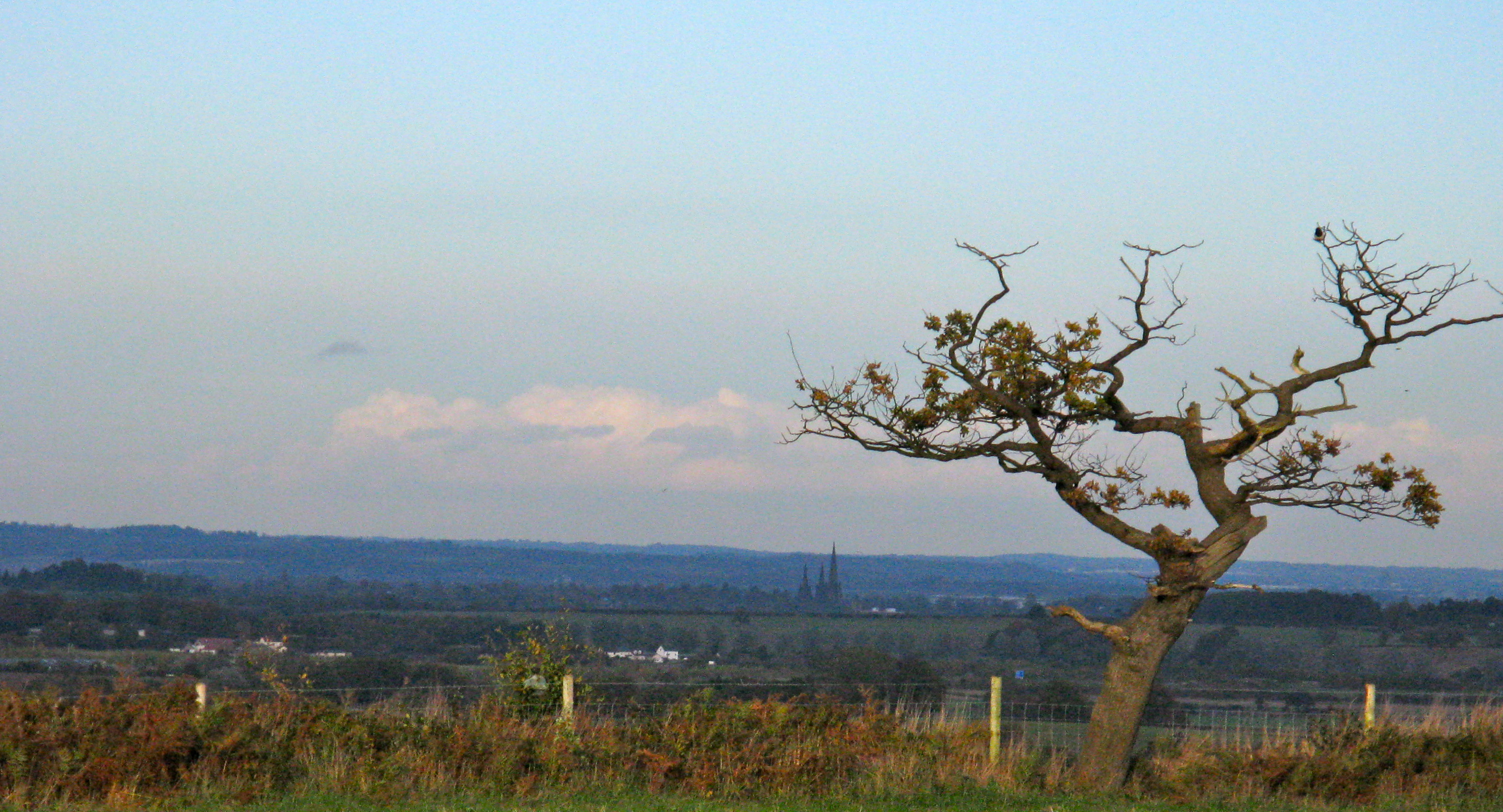
I’m very near the edge of the parish of Aldridge, in the November dusk – looking north-east from the rise which is “Lazy Hill”. To the left, out of view, is the bosky mound of an Iron Age Fort. Beyond it, and behind me, are the sites of former collieries. Dominating the middle distance is the triple spired cathedral of Lichfield. The fields and hedges of Stonnall, Shenstone, Lynn and Wall lie between. They are changed, but perhaps not unrecognisably so, and wandering ghosts of the last several hundred years could still find their way home down the deep lanes.

What a touching thing it is to have sight of the census return forms from the middle years of the 19th century, when the enumerators knocked on the cottage doors of my ancestors in this same landscape. I imagine that I can hear the very voice of my great great great grandfather William Horton, mason, of the hamlet of Lynn, speaking his response to the well dressed, literate stranger – his name is recorded in 1841 as “Orton” and not “Horton. Born in 1796, he may not have had the opportunity to learn to read and write – even his own name. Or perhaps the enumerator simply wrote down the aitchless word he had heard, and the humble man did not have the confidence or the interest to correct him.
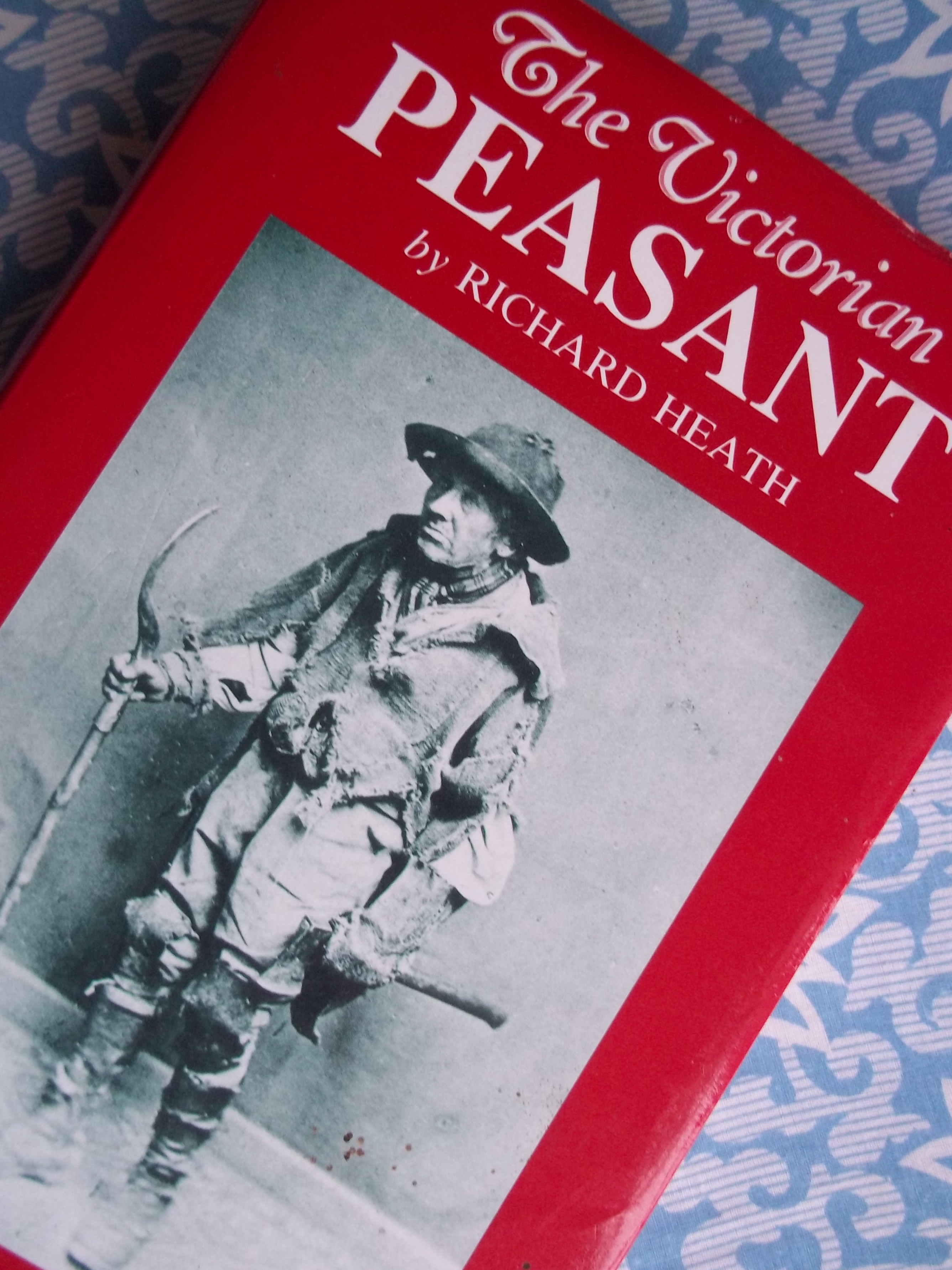
“Ag Lab”, or “Mason”, “Bricklayer” or “Nailer’ were frequently jotted in the column headed “Occupation” on these visits. There was some diversity of the manner in which my father’s family earned their living,  but most were bound to the agricultural industry. Horton families were large, no doubt wages were small, but thanks to the geology and customs of the area, the cottages were brick built, weatherproof, and substantial enough. Of all the counties which Richard Heath toured in the 1870’s, chronicling the poverty and degradation of the lives of the rural working classes, Staffordshire does not get a mention. Did these good, warm-red brick cottages provide him with no sensational tales of hardship? The talk in Heath’s articles is all of damp, crowded, vermin-infested cob and thatch. Nevertheless, the assertion that “in the process of modern civilisation, the English agricultural labourer has been the constant loser” is as applicable to South Staffordshire as elsewhere. When coal mining began in earnest at the Walsall Wood and Aldridge collieries, the newly dug shafts seem to inhale deeply, and draw in the sons of the soil from surrounding villages. Living conditions in the “Buildings” and “Rows” clustered around the collieries may have been poor, but it was the comparatively favourable wages which enticed men.

“Sons and Lovers,” is D H Lawrence’s semi-autobiographical account of life in the Nottinghamshire Coalfield at the end of the 19th century. In it, Walter Morel points out that even as a white collar worker, his clever son William will not earn as much as he could at the pit: “Put ‘im i’ th’ pit we me, an’ ‘ell earn a easy ten shillin’ a wik from th’ start,” he says. But William will earn only 60% of that, that is, six shillings, “wearin’ his truck-end out on a stool” instead. (Not that it does him a lot of good in the end, as we know!)

Obviously, there are other considerations than wage levels when choosing a job. In Yorkshire, my late father-in-law told his three sons: “I’ll break your chuffin’ legs before let you go down that pit.” And none of them did. Ken, my husband and his youngest, born 1943, quite contentedly started work as a farm labourer on 60 shillings a week.  Mr Ward senior had loved, as a young man, his work with the draft horses on the farm.  But fatherhood and family pressure cajoled him into a 40 year symbiotic relationship with The Colliery. Here, to Clifford Ward, were offered wages more fit to keep his inexorably growing family on, in return for his health and most of his waking hours . “Double’uns” were available, and so 18 consecutive hours could and would be worked on weekdays, high-days, and holidays.

By the turn of the 20th century, the “Occupation” column of the census returns of my father’s family are  sparsely interspersed with “brick maker”, but overwhelmingly dominated by “miner”. We know that my grandfather, Alfred Noah Horton, just like his cousins and second cousins, and third cousins in Walsall Wood, was coal mining at the time of the 1911 census. He was rejected from army service in the Great War because of a missing eye.  Was he then obliged, I wonder, reluctantly to continue in the pit for the duration of the war? His eldest child, my Aunt Mary, looked back to around 1918, and remembered him working in the sandpit at Shire Oak. Later, she describes him as working in the building industry, which is what I understood he had done.

That not all of their neighbours were miners had been the source of my great grandfather, Enoch Blann’s haulage business in Walsall Wood High Street – near the bridge, the family remembers. His pony and trap loaded coal at the “Dry Bread” pit to sell to those who did not benefit from the miners’ coal allowance. He kept a shop, too, listed in Kelly’s Directory of 1912. My grandmother had taken great notice of these activities, and put her knowledge and initiative to use to “keep the wolf from the door” in Aldridge Road, Vigo.  This is from Aunt Mary’s memoirs:

We moved into Number 1, a shop. We sold fruit, veg. and think we sold fish. A stone had made a small hole in the thick glass window large enough for me to pass nuts through to a girl named Flora James. The people next door had a fish and chip shop, they closed and we had the fryer from them. All the miners used to come in in their pit-black, buy fish and chips, then stand in the shop and eat them. As the miners all came off the afternoon shift , that meant 10.30 at night – and I saw them – goodness knows when I went to bed . Mother went into Walsall on the first tram to buy fish ( and ice at week ends) that’s when she made ice cream which was sold from a sort of churn fixed to the front of a bike. A man sold that, she sold it from the shop.
When she fetched the fish and ice I had to take the pram down to meet the tram at the terminus where the conductor always helped to load up the pram. The same pram went to help her carry her bags.

My grandmother Lizzie’s father Enoch Blann was dead by now, and no “pit coal allowance” meant that other means of obtaining fuel was necessary.  Young Mary and her little brother Bill made use of any available resources to help the family keep warm.

Bill and I and a few other kids went down to the brickyard ash tip taking sacks with us to pick cinders for free firing. Sometimes the ashes came straight from the brick kilns and very hot. Had a fight with a boy who was ” picking on” Bill. He pushed me down the cinder bank – I burned my arm At times the scar shows up.

But when the pit was on strike, then everyone was struggling to find fuel:

There was a time round about the big strike when there was no food or coal. Our mother, me, Mrs. Pinches and her son called Bach-y about my age went down to the Dry Bread Colliery in the dark. The mothers put us into a coal wagon to pass out lumps of coal which they put in bags, We were lifted down and proceeded carefully back to the road. Us kids got under a field gate and the sacks were put on our backs. The mothers walked on the road, us kids walked on the other side of the hedge, coal on our backs. By the time we had walked along two sides of the field I felt my bottom was almost touching the ground. The mothers carried the bags when we got nearer the houses. Once home coal was heaped on the few sticks. During that time we only had fires after dark – all colliers coal allowance had gone  coal smoke from our two chimneys would have looked suspicious.
Posted in Uncategorized | 9 Comments

When we were very young

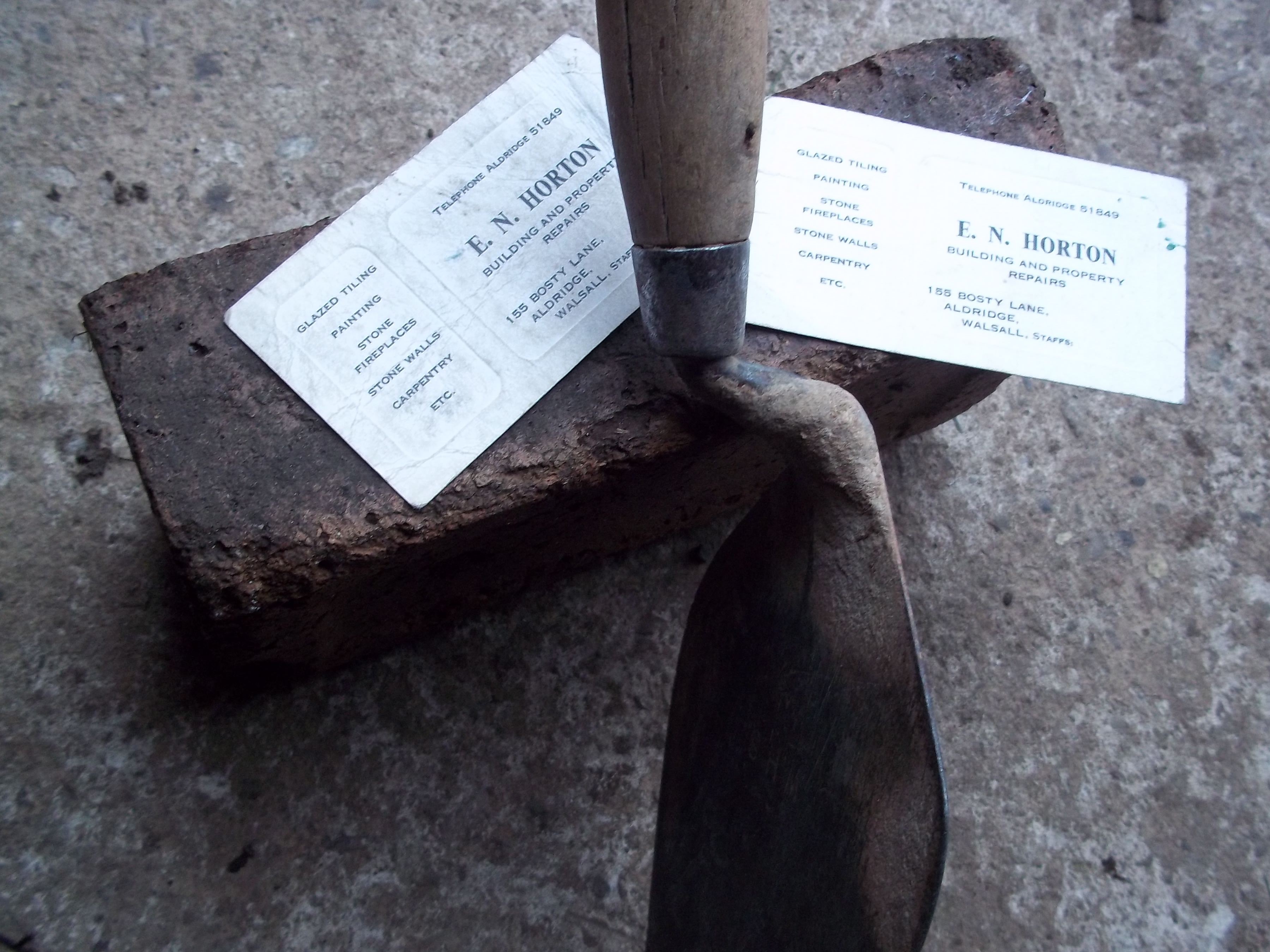
It was “Decorarte” in Hatherton Street, Walsall for bespoke paint and wallpaper, Shenstone Brickworks for bricks, and Mr Hilditch’s shop in our High Street in Aldridge for the odd dozen nails or screws. It was Magnet Joinery in Lichfield for timber. But some time in the very early 70’s, “The Big ‘K'” became a convenient one-stop shop for many of my Dad’s building materials. That builders’ merchant, with an eye to the burgeoning DIY market, was our nearest approximation, then, to an out-of-town superstore. It had been erected on a spacious site, reclaimed from industrial activity – adjacent of what my forbears had disparagingly called the “Dry Bread” pit because of its meagre wages, and the pit’s associated brickworks.  It had an unused Sunday morning car-park round which I, like many others, I suspect, made their first staccato circuits learning to drive a car.

“The Big ‘K'” was in an area known as “The Vigo”. Somewhere near the perilous meeting of five roads at “Street’s Corner” had stood the house in which my father had been born, and where he had just about started school, before the family upped and moved back to Footherly, to Keepers Cottage, the use of a couple of acres, clean air, and quiet. But whereabouts could it have been? In response to my enquiries, my Dad would wave his hand vaguely in the direction of a building incongruously called “Swiss Cottage”, which didn’t look to me like it had been there since 1925. His scant memories of the time were a novel mixture : A bear in the street; an Airship looming overhead, and a vividly recalled conversation on the way to school one sharp frosty morning, accompanied by a slightly posher boy. Beset by a chesty winter cold, little Ted had complained “I ay arf gorra cuff”. To which the child replied, jabbing with his finger at my father’s small, and, no doubt, threadbare wrist: “That, my fellow, is your cuff. You have a cough.”

King’s Hayes Farm, helpfully still standing, where Uncle Bill, my Dad’s oldest brother would be sent with a pitcher to fetch milk, was only “over the road” which gave me another half useful clue. “No milk today, Mam.” Bill had said one morning, according to family legend, as he returned to the kitchen empty handed. “The cuh’s ‘ad two little ‘osses!”

The alarming wild animal, the huge flying cigar, and the Horton family jokes are, thankfully, not all I have to go on: In her 10th decade, my Dad’s eldest sister obliged by writing some records of this era long ago, including where they lived. She was born at Fishponds Cottages,  in 1913, but the first house she had memories of was on Shire Oak Hill, and that was firmly stuck in the mind because of the following traumatic incident.  It took place, she thinks, she was about four years old:

… I had been sent up to the Sandhills. To get there, I had to walk about a quarter of a mile, cross the crossroads at the Shire Oak pub, and go down the Lichfield Road about 200 yards then turn into the track down to the sand hole where Dad was working. Dad gave me an envelope with his wages in, and took me back to the road. I hadn’t gone far when a huge dog bit my arm, and I screamed “Blue Murder!”. Dad appeared, and carried me home

Thence to “The Vigo”….Where the

……roads met.  All had terraced houses…….The Vigo…the road down to Walsall Wood…our road led to Aldridge….joined Salters Road which could take you to Brownhills.  Directly opposite the pub was a real country road called “The Castles” which led to Stonnall.

The next house we lived in was about number six, Aldridge Road, later…..we moved into number one.

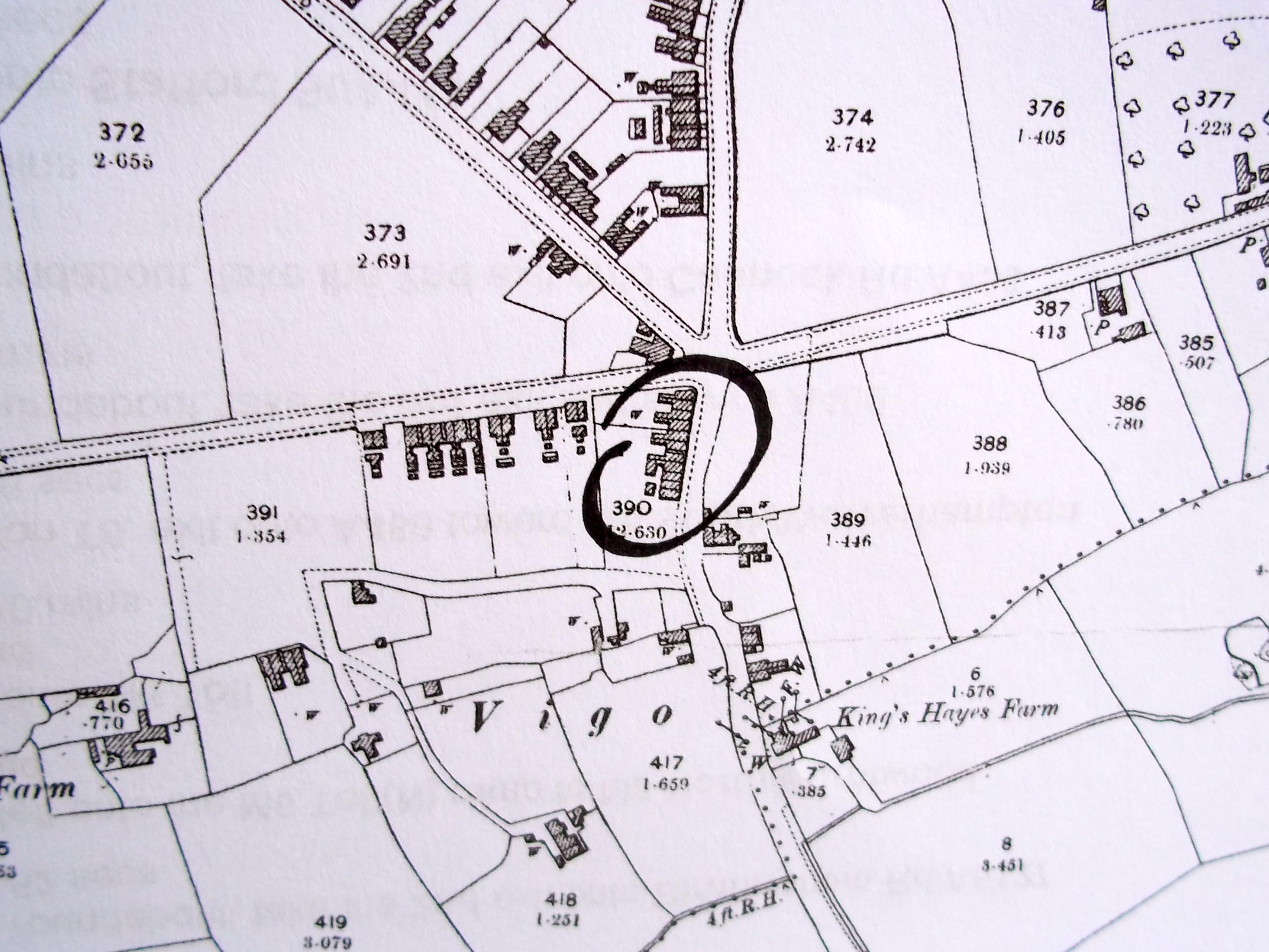
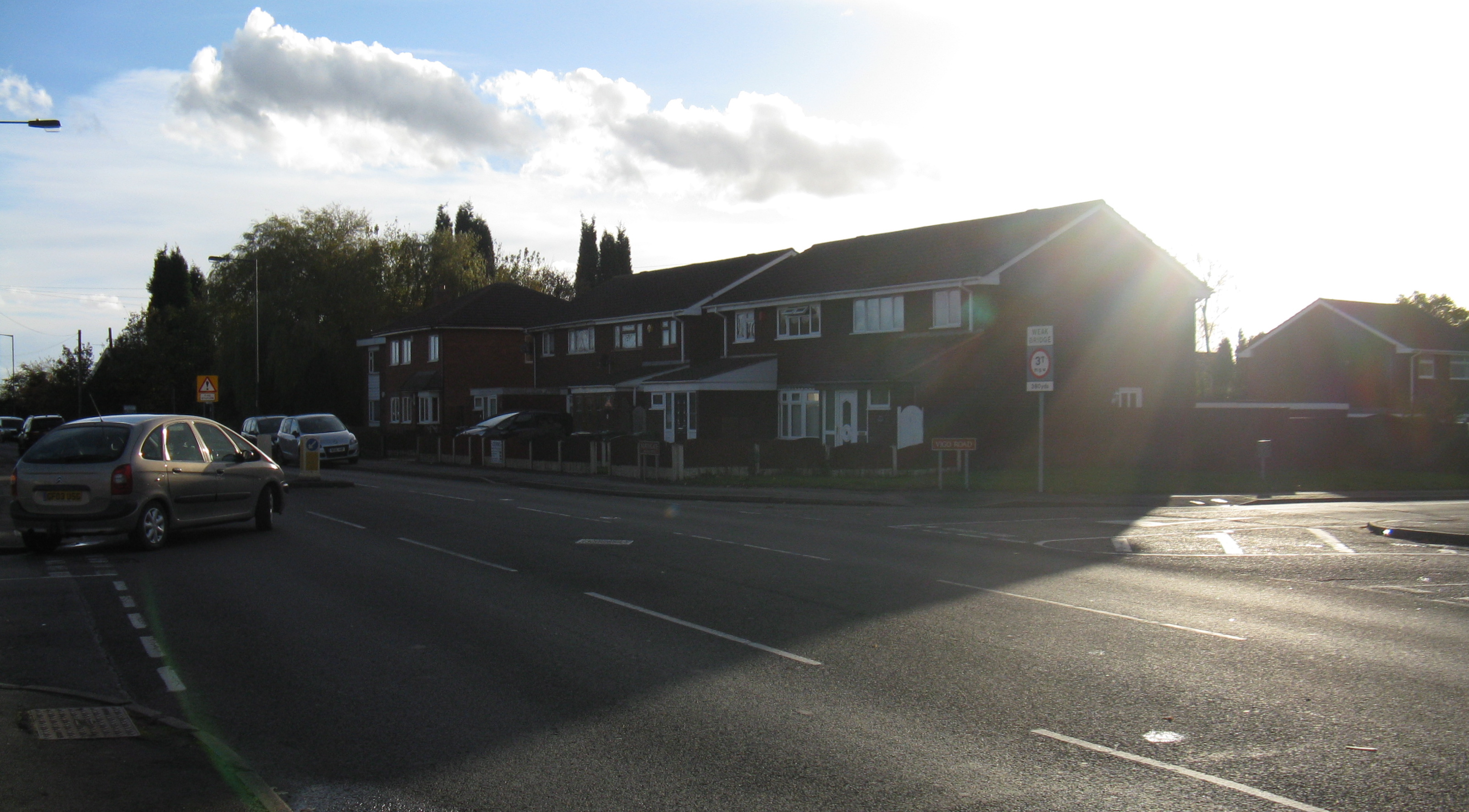
So, there I have it. The modern pairs of houses at the top of what was “Aldridge Road” but has since been rechristened “Northgate” don’t start quite from Vigo Road as did their predecessors, which are clearly marked  on my reprint of the 1901 Ordnance Survey Map. By my calculation, where my father was born, on August 31st 1925, is now a little patch of mown grass, at the corner of these now busy thoroughfares. Would you like me to lead you up those roads when children could play at energetic bouts of  “Kick can I erky”  in the gutter, their game seldom interrupted by motor vehicles? We can even look through the little windows, and name some of the neighbours going about their business, or involving themselves in some dramatic happenstances. Let us then make a date, and soon, to leaf through some more of Aunt Mary’s notebooks.

The site of 1- 6 “Aldridge Road, Vigo”, now Northgate, today.

Posted in Uncategorized | 9 Comments

“…..with a cough that seemed to make US feel ill….”

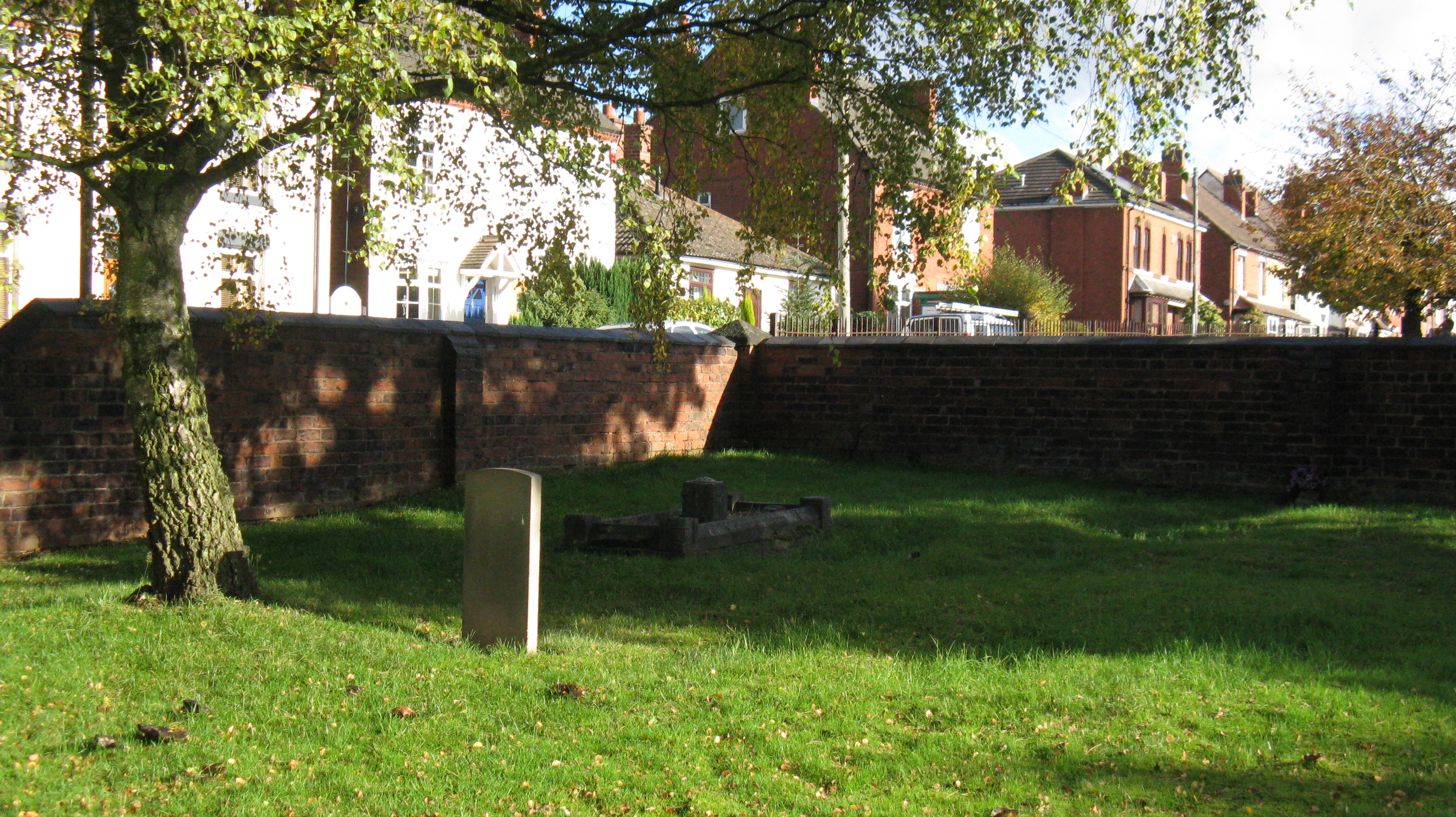
The site of military graves in a corner of Brookland Road Cemetery, Walsall Wood. November 2012

We children Jimmy ( my age) Jack and Noah ( his sons) Bill and me hung on the cemetery wall to watch.

Until 31st August 1921, almost three years after The Armistice, service personnel received a military funeral, and an official World War grave. My Aunt Mary, looking back more than 80 years, remembered watching the funeral of her Uncle Arthur in the summer of 1920, along with her little brother Bill, and Arthur’s sons, her cousins, Jimmy Jack and Noah.

There was a military funeral. Lots of soldiers and a padre in uniform who read from the bible. Three soldiers with guns stood each side of the grave and fired their weapons over it.

Walsall Wood Cemetery would have been a procession of only 300 or so solemn paces for the funeral cortege from “The Vigo” where Arthur Enoch Horton had lived with his wife Alice, and their family. His children had evidently been allowed no role in the ceremony. Jack, aged 14, Noah, aged 12, and Jimmy, aged 7 were reduced to peering over the coping stones of the cemetery wall with their cousins as their father’s body was laid to rest.

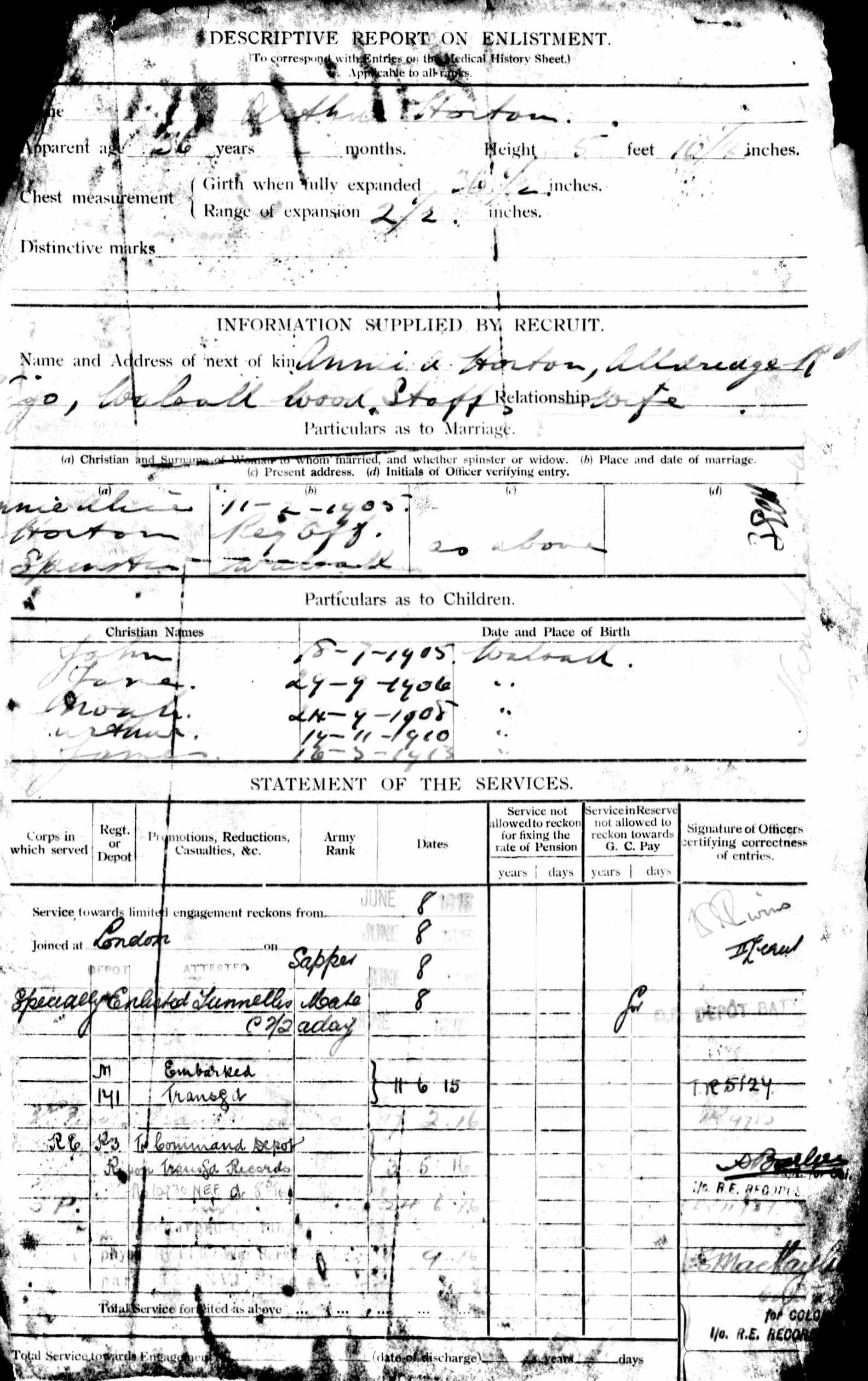
Part of the Service records of Arthur Enoch Horton, 1879-1920

If they could remember their father at all from before the war, how different he may have seemed from the young miner who had moved from Shenstone parsih with his bride in the early years of the century to work for a while in the pit at Atherstone. It was there where Jack and the boys’ only sister, Jane Ellen, ever after known as “Sis” in the family, were born. Still, the man remained an imposing presence : his height of five feet 10 and a half inches, noted on his army enlistment forms, was tall in an era when the minimum height for recruits was reduced from 5’3″ to 5′ during the course of the conflict, and even as little at 4’10” for so called “Bantam” regiments

Uncle Arthur, [my father’s] brother-in-law and relation, frightened me. He seemed like a giant in his army uniform, he had brown fierce eyes I could just see under his cap. I remember him a sick man in bed with a cough that seemed to make US feel ill. Died from Mustard Gas I assume.

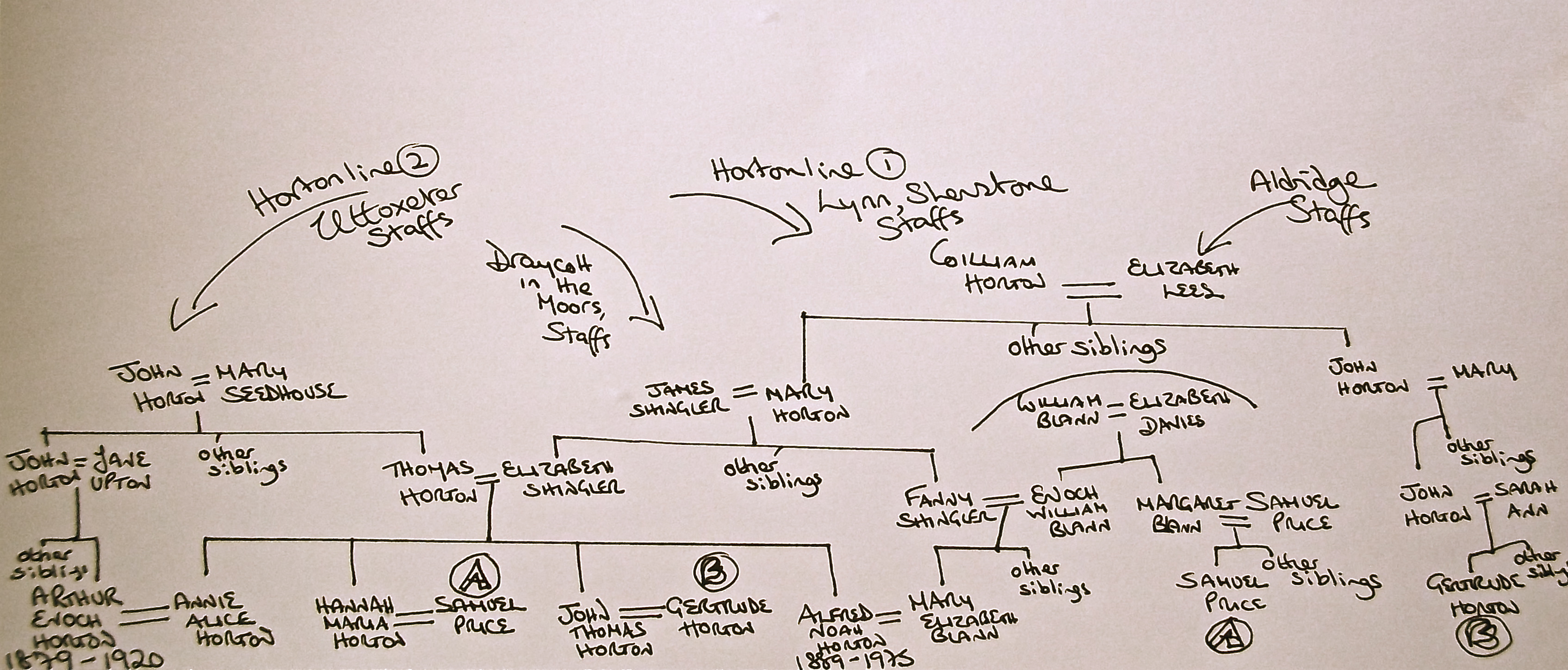
Annie Alice Horton, Arthur’s widow, was Grandad Horton’s sister. Arthur Enoch Horton was also my grandfather’s (and therefore also his own wife’s) cousin. Such was the cautious mode of mate selection in Grandad Horton’s family that two of them married their first cousins, one married his second cousin, and the remaining sister, Hannah Maria Horton, married her sister-in-law’s cousin, Samuel Price. Sam’s mother was a Blann aunt of my grandmother. Hannah’s descendants are therefore doubly related to me.

A simplified plan of part of the Horton family tree, showing the surprising extent of cousin-marriages in my grandfather, Alfred Noah Horton’s generation.


The most recent interment I attended at Brookland Road was that of my father’s cousin – twice over – Elizabeth Margaret Haycock, nee Price, Great Aunt Hannah’s daughter. I remember, as a child, being delighted with Cousin Margaret’s obliviousness to norms of behaviour and her devotion to the natural world: tortoises and rabbits lived in luxurious liberty in the sitting room of her house, which was on the steepest part of Shire Oak Hill. Previously unencountered relatives who presented themselves at her wake made me and my mom swoon with their (understandable but still remarkable) resemblance, both in looks and mannerisms, to my late father.

Arthur, himself both my great uncle and cousin-twice-removed, was born in Shenstone in 1879. He was over 36, not in the first flush of youth, when it became clear that War against Germany would not bring the swift and easy victory which was at first promised. He signed on with the South Staffordshires in Lichfield on the 15th of February 1915. But Arthur had a special skill as a miner. He became, by June that year, “Sapper A.Horton, “Specially Enlisted Tunneller’s Mate” into the 176th tunnelling company of the Royal Engineers which saw action in Loos and Arras. Uncomfortable vignettes inspired by Sebastian Faulks’ novel, “Birdsong” come into my mind when trying to picture the challenges and privations which Arthur must have faced during those campaigns.

His army service lead to the grant of a pension to his widow, Alice after his death on the 23rd of July 1920. Requests for documents including his discharge papers are recorded as being fulfilled during the closing months of 1920. Even a little regular income must have represented precious security to Great Aunt Alice. Her children were barely old enough to be employed. Her widowed mother, Elizabeth Horton, nee Shingler, moved in with her and the two women did what work they could. At least their jobs did not directly or indirectly depend upon the pits. Hard times were ahead for those not in that position, such as my own grandparents. My Aunt Mary remembered the household of her Aunt Alice and her Grandmother as a peaceful, feminine enclave:

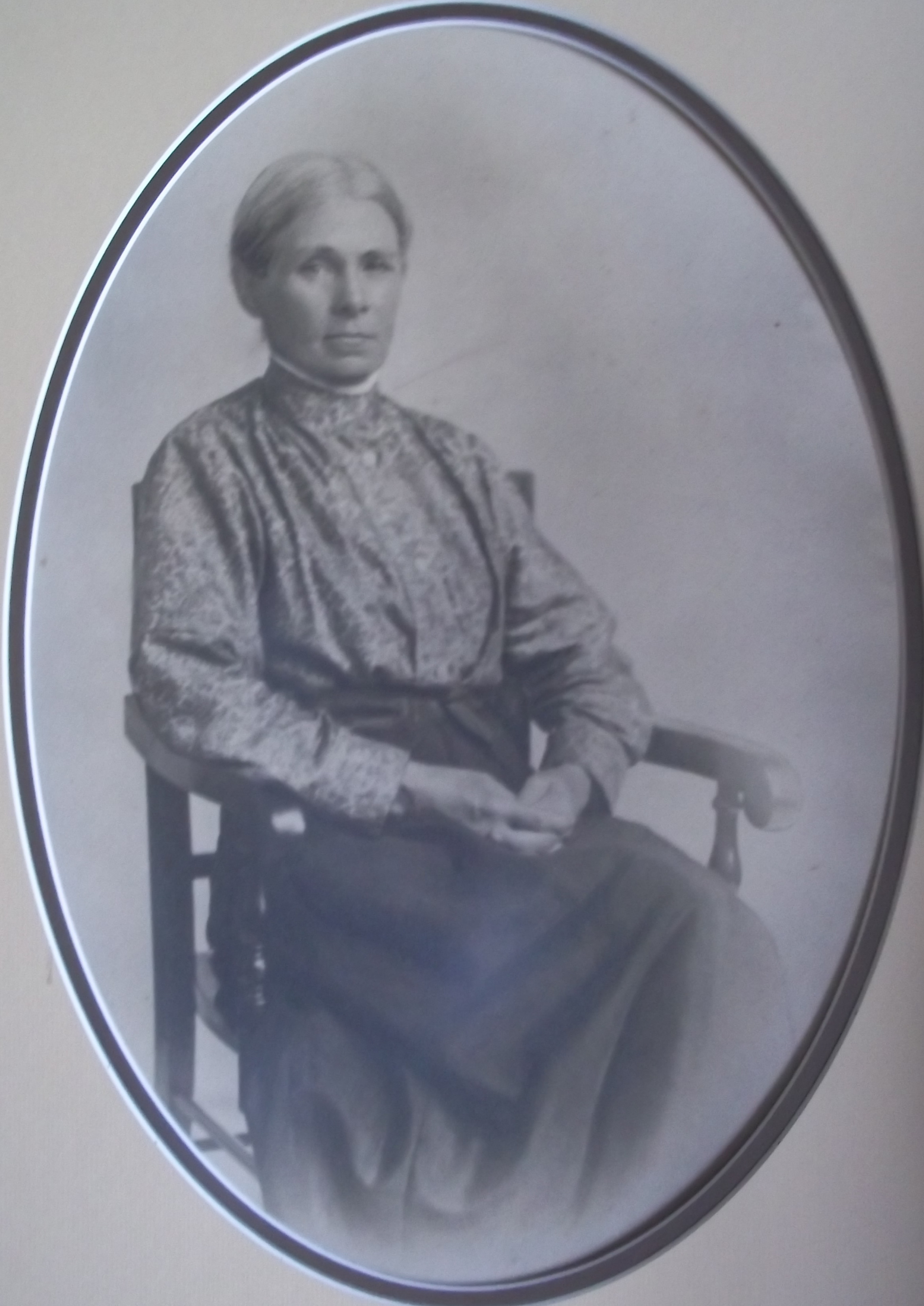
My great grandmother, Elizabeth Horton, nee Shingler, born Cartersfield Lane, Stonnall, 1862.

[my father’s] mother was a very nice person – she lived in Aunt Alice’s front room (Aunt Alice was one of her daughters), I didn’t see much of her. What I do remember was a white ironed cloth on the table, sparkling brasses, sparkling grate and kettle, and Granny, smiling, with shiny shoes, black skirt, white apron, white blouse, and white hair fastened up the back of her head. She used to say ” Well, come in child..” I was allowed to stand beside the window covered with white lace curtains, even the lamp on the table had a white globe on it. I really wasn’t allowed to go to Grannies, when she and Aunt Alice walked down the street to go up to what used to be the R.A.O.B. orphanage for unwanted children ( Granny sewed, Aunt Alice worked) Bill or I were not allowed to speak to Granny – because we would get walloped [by their mother] we didn’t- but as my face pointed to the street, I always smiled. The orphanage was opposite Birch Lane on the way to Aldridge – believe it became a school. Often wondered if my Dad knew we were not allowed to speak to his mother.

Posted in Uncategorized | 5 Comments

“Murder!” she said….

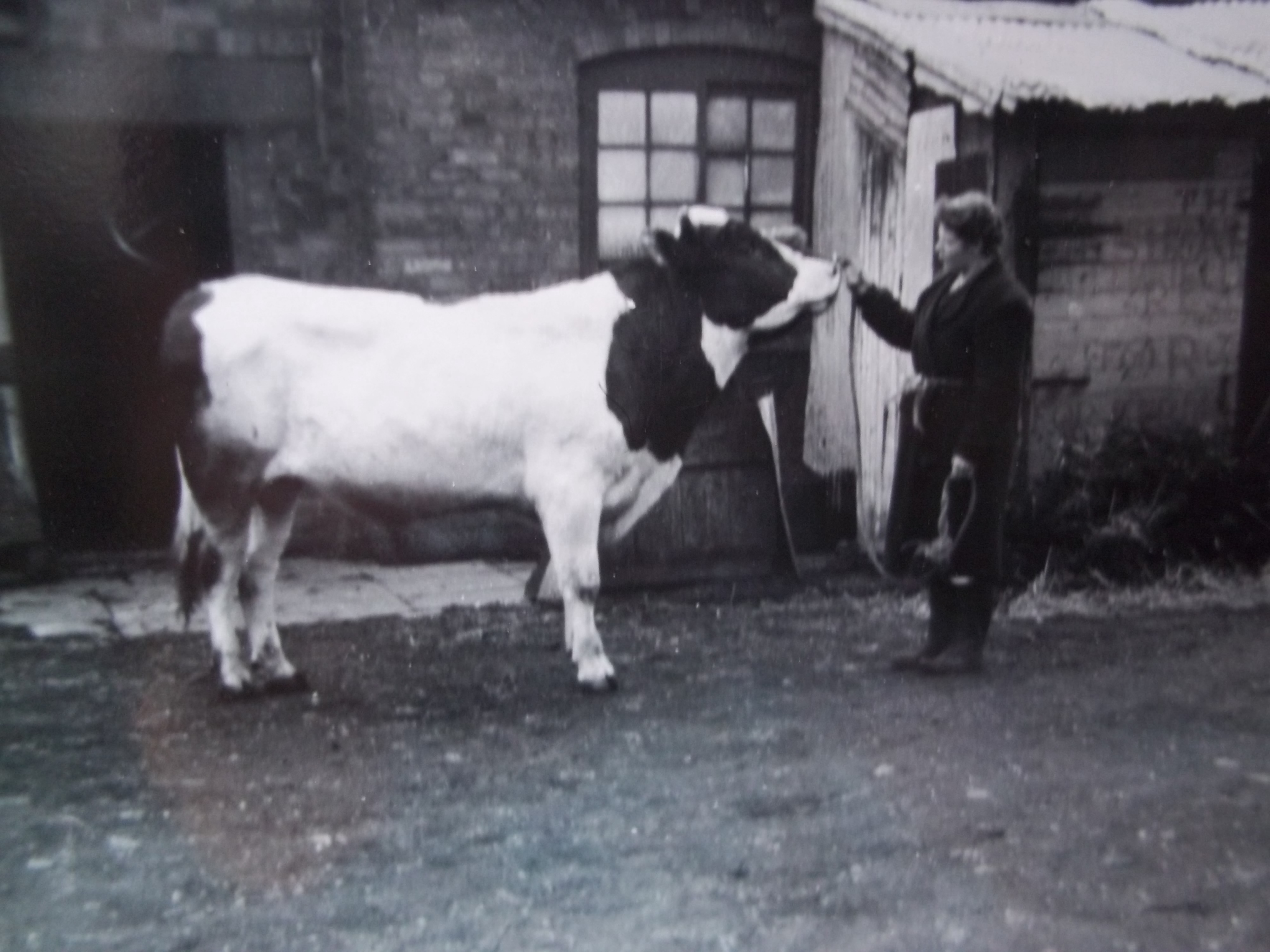
In the farmyard at The Owletts, Aunty Mary shows recalcitrant “Billy” who’s boss. A murderess is no match for her!!

As the Second World War broke out, changes were afoot in the little hamlet of Lynn in Staffordshire.

In 1937, my dad’s eldest sister, Mary Horton, had become Mrs. Alfred Cooper, and married life had begun in the “Lodge” on Lynn Lane, at the end of the drive leading to the Coopers’ farm, The Owletts. Aunt Mary relates, amongst the memoirs she wrote late in life:

The last week in August 1939 was quite strange. Father-in-law had moved out of the farmhouse and rented the next farm, leaving Owletts Farm house empty.

During the hours of darkness there was much rumbling of vehicles going up and down the long tree-lined lane to the farm. We knew something strange was happening to do with all the rumours of war, which were on everyone’s lips.

” Oooh ar!” said the postman, who only had one arm having lost the other in the last war. ” You can’t fool an old soldier, we’m gooin’ for him, an’ it won’t be long.”

A searchlight site was installed in the big field, the generator that powered it situated in the orchard beside the farmyard. When the camp was in order, the soldiers vacated the farmhouse, and Aunt Mary and Uncle Alfred took up residence.

The war in Europe really got going, and men committed acts of violence against their enemies.

But loping along the hedgerow, here comes a violent woman, and she is heading straight for the farmhouse, where Uncle Alfred is already in bed (he will be making an early start on the milking in the morning) and Aunt Mary is completing the long day’s chores in the kitchen…….

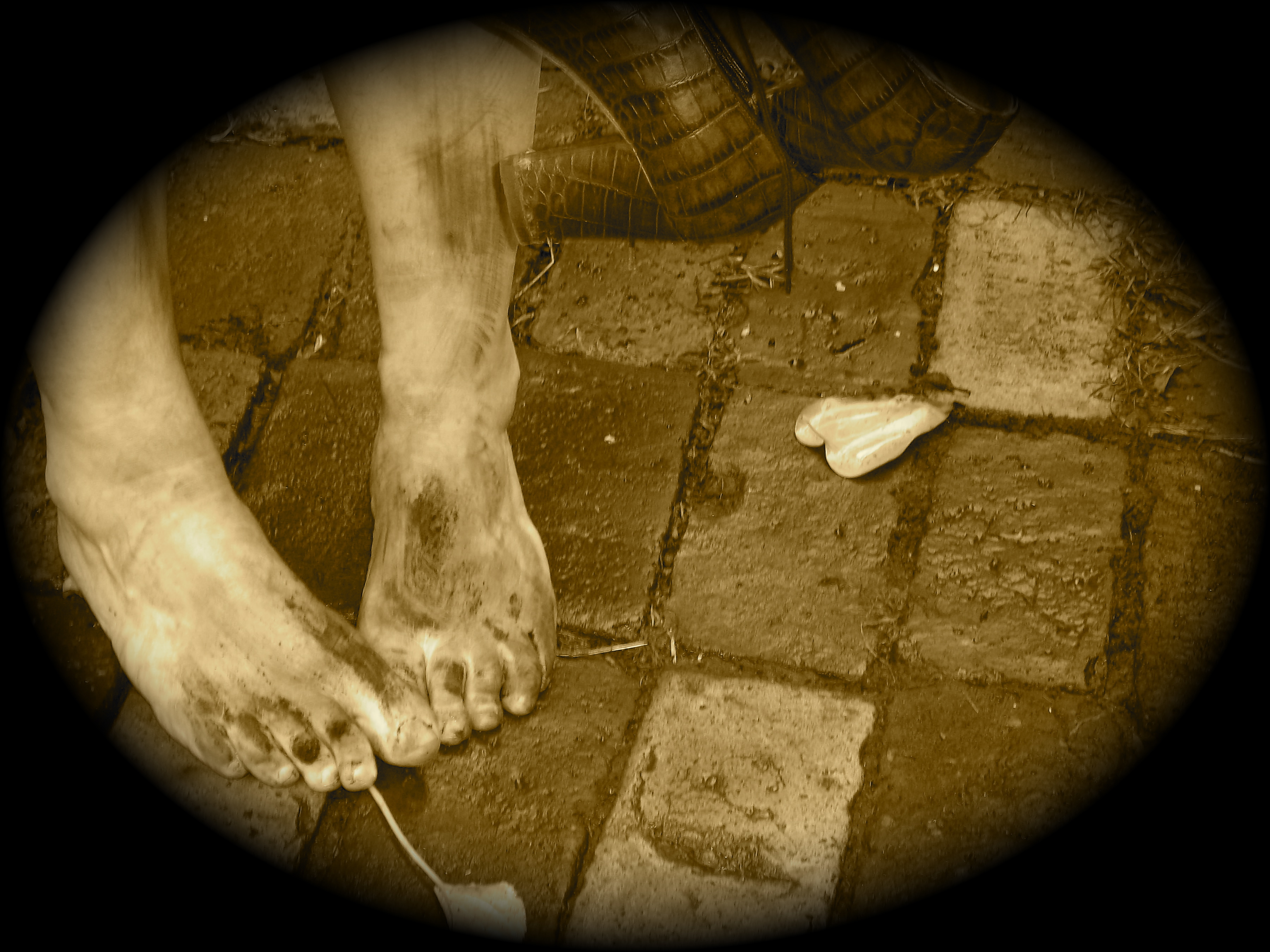
A woman knocked on the kitchen door about 9 o’clock and asked if she could wash her feet, her shoes were in her hand, her feet bare. I said ” Yes, but I have no hot water” She answered by asking: ” Could I sit near your fire?”

How very odd that request was, the grate was empty.

She began to wash her feet. I stood looking at her. The sergeant from the camp walked in: ” A friend of yours?”

” No, never seen her before.”

The sergeant went out ” I’ll be back shortly.”

Meanwhile, the young woman carried on washing her feet. When she spoke, she asked: ” Aren’t you afraid, letting a stranger into your house?”

I laughed: ” Not unless you are a thief or a murderer!”

She burst out crying, ” I have murdered my husband ”

At this point Sergeant returned with a corporal. I told him what she had said. He looked at the woman: ” You’ve done WHAT missus?”

” I have murdered my husband. ” Her voice was now calm. She was no longer crying. Corporal was sent back to camp to phone the police.

My husband, the sergeant, and our local policeman, who was also “Sarge”, stood between the large farmhouse sink and the large table. On the side near the empty firegrate sat the young woman. I stood at the narrow end near the door. Husband asked why I had got him out of bed, but soon forgot bed!

Soon Corporal returned with a message for his sergeant: He was to go to the phone. There was a small procession out of the house into the yard: Sergeant, Corporal, my husband, and Sarge P.C. Sarge P.C turned at the door and told me to lock it: ” An’ Missis… don’t let her have the key.”

I locked the door, plunged the key down my bra then turned to the woman who had stood up, saying, ” Please let me go.”

” No. You heard what Sergeant Spraggett said.” She began to walk round the table towards me. I suddenly realised the position I was in – locked in a room with a murderess – only my kitchen table between us.

” Give it to me please..”

” NO!”

I moved round the table away from her, determined to keep it between us, knowing that she could try to take it from me. We might fight for that key. I might come off worst! Her request turned to demand. I tried not to show my fear.

” Give it to me.”

” No”

She shouted, ” GIVE IT TO ME! ” I thought, ” God, she is going to have a go at getting it. Relief came at that moment. A man’s voice: ” Open the door Missis, it’s me Spraggett.” Never did a man’s voice sound so sweet! He said: ” I have to take her to the station for the night, they will pick her up in the morning.”

We watched him take her across the yard to where his bike stood against the stable door. He held her with one hand and pushed his bike with the other as they slowly faded into the dark. It was just a mile to Shenstone village and the police station. Not a light to be seen anywhere. There had been a full moon for a few nights so there had been no sirens wailing and the searchlights stayed at rest. The moon would be up in about an hour, we expected another quiet night. The sergeant and corporal went back to the camp, we returned to the house. We were drinking a cup of tea when Sarge Spraggett returned..

” Her’s Gone! Loosed her hand for a second and she was across into that field across the road like a bloody hare! I biked round the back road, but her’d gone.”

Sarge Spraggett had a cup of tea, then he went and we were able to go to bed… though my recent ordeal kept returning to my head.

Next morning we got the news the woman had been found near Burntwood, which was 8 miles away, in a very distressed condition. Later in the day her family said her husband had not been murdered, he was seriously ill in hospital.

Sargeant Spraggett! You couldn’t make up a more perfect, Blytonesque name for a country bobby, could you? Or could you? The 1911 census reveals a nest of Spraggetts at Chorley Road, Boney Hay, of which our Sergeant might well have been a scion. I asked Cousin Ros whether Seargeant Spraggett was really the police officer’s name…”Oh, no”, she said…..”Dad always called him “Bloody Spraggett!”

Posted in Uncategorized | 8 Comments

Riches and Poverty

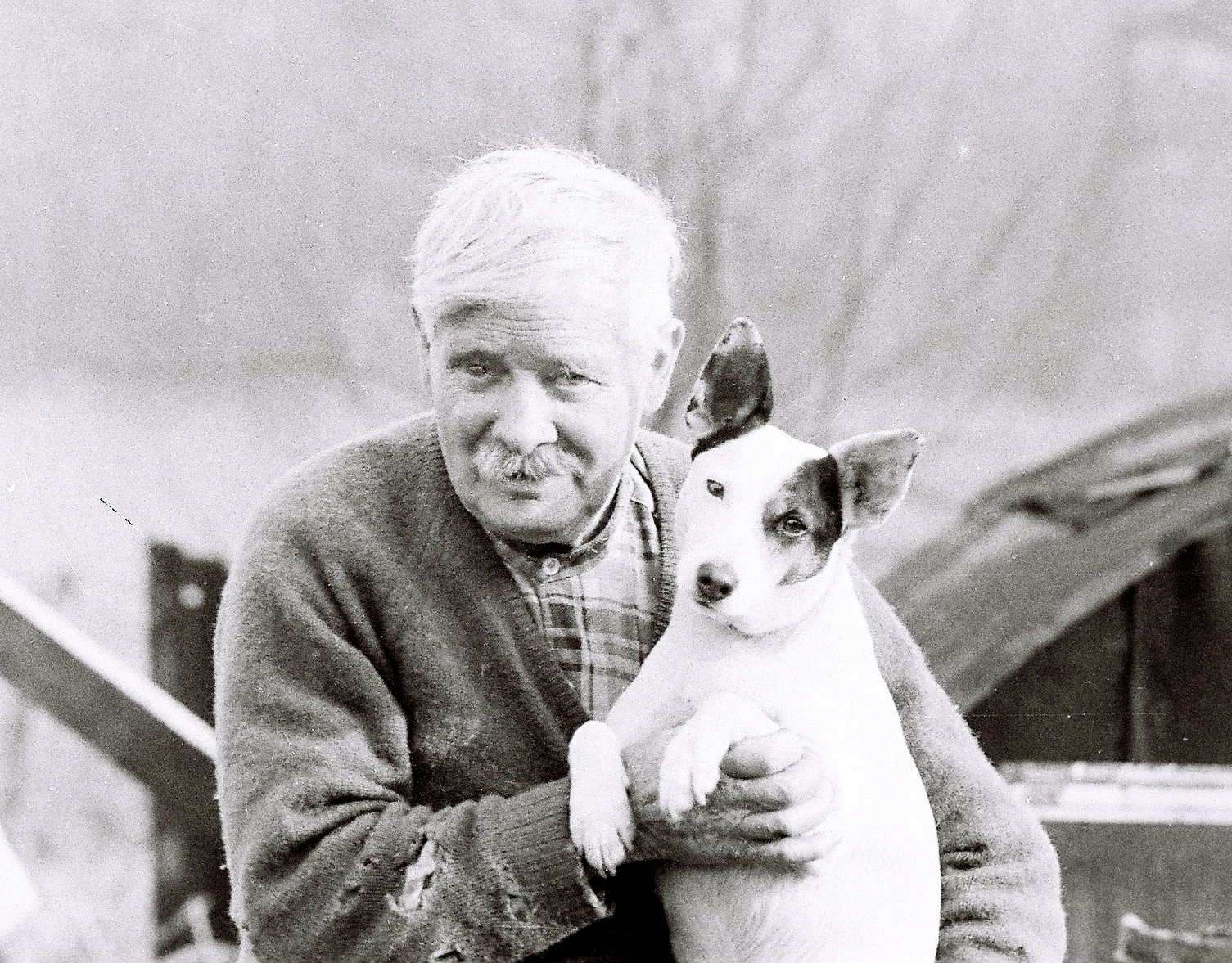
Alfred Noah Horton, “Pop” to everyone, with Suki, at the top of the field at Keepers Cottage, Footherly.


My dad found his own father an engaging subject for photographic portraits. “Pop” was now in his 80s. His face has the craggy patina of age without appearing careworn. His still quite full head of hair and very thick moustache hark back to the Edwardian tonsorial fashions of his youth. I can still remember the harsh texture of that bristly thing against my girlish face! His expression is very merry, which is fair reflection of his character, even though he is not smiling – for many years, he had enjoyed the benefit of neither teeth nor dentures, but his gums were hard enough to tackle almost any food.

It’s a lop-sided countenance: Some time before the First World War, working with a threshing machine, a belt flew off and took his right eye straight out. Still, that disability meant that the opportunity for military service was denied to him, and he survived the war to beget his younger children, the last of whom was my father, born in 1925.

Pop began widowhood with his family around him. Uncle Bill never married, and continued to live with Pop on the smallholding at Keepers Cottage. Uncle George was in Stonnall Village, Aunty Nellie with her family at Weeford, us in Aldridge, and Aunt Mary just a field away at Owletts Hall Farm. There was the companionship of the Jack Russell terrier Suki, who had arrived as a puppy very shortly after his loss of my grandmother. Suki had notoriety as a sneaky “nibber”, but she and I were best friends. And there was as much pleasure for Grandad as ever in growing things.

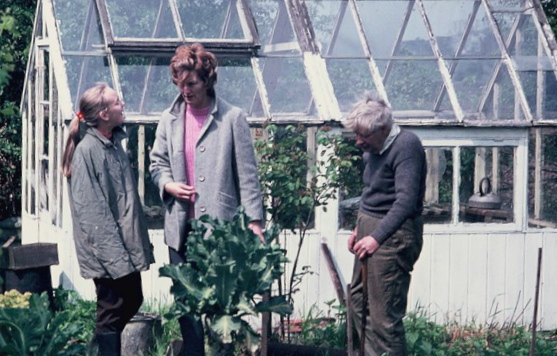
Me, Mom and Grandad in the garden at Keepers Cottage in the early 1970s

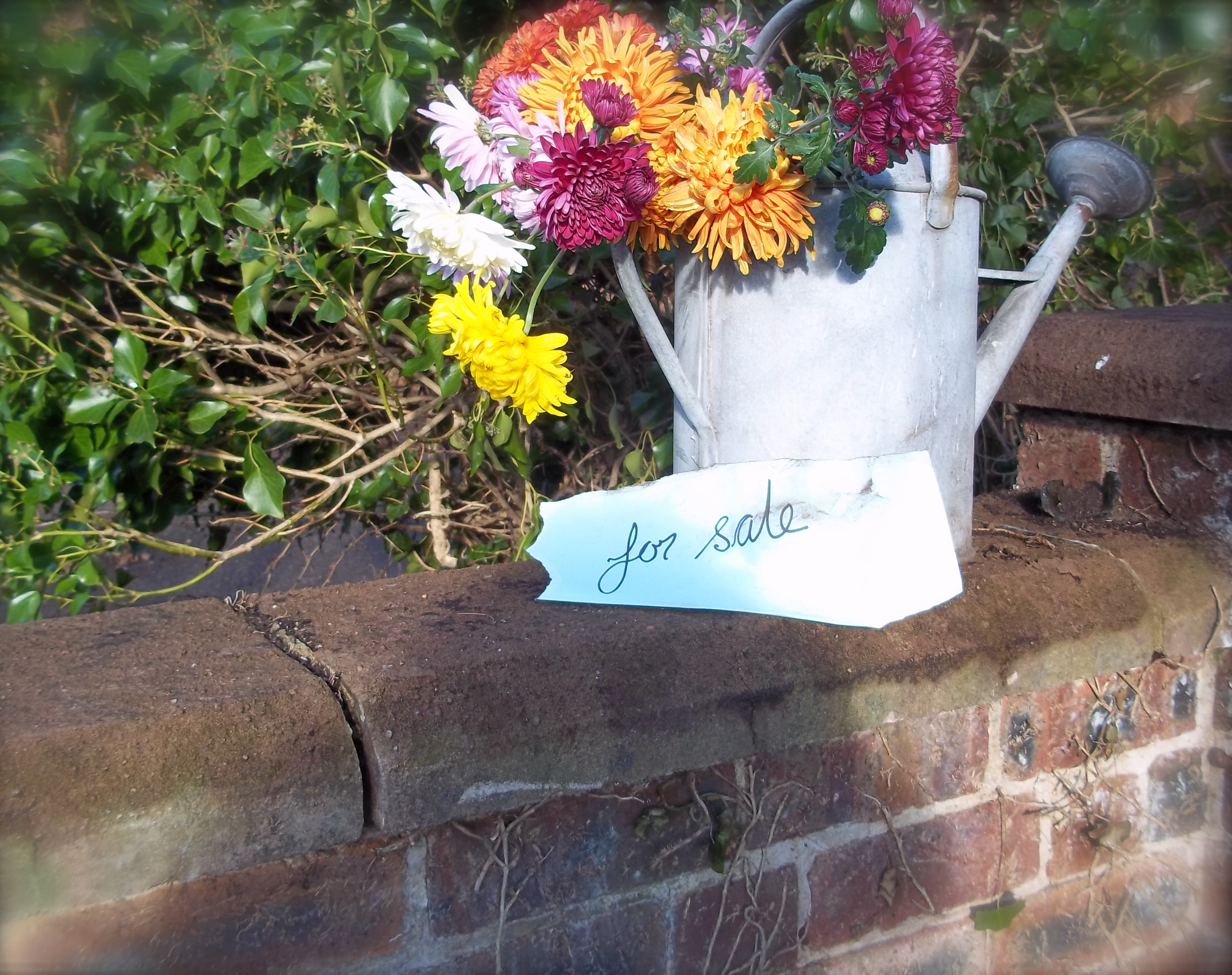
Filling the table with homegrown produce had been a necessity for our family as for many others, but I now realise that Grandad’s level of enthusiasm and expertise in horticulture was unusual. The sheer variety of fruit and vegetables he grew was remarkable: A paraffin heater in the greenhouse enabled him to cultivate cucumbers and grapes, and ensure a long season of tomato cropping. His cauliflowers, (something I have always found very difficult to succeed with) were a picture. I can see them now: creamy curds facing outwards towards Footherly Lane, on top of the wall at Keepers Cottage, beside containers of cut flowers, for sale to locals and passers by.

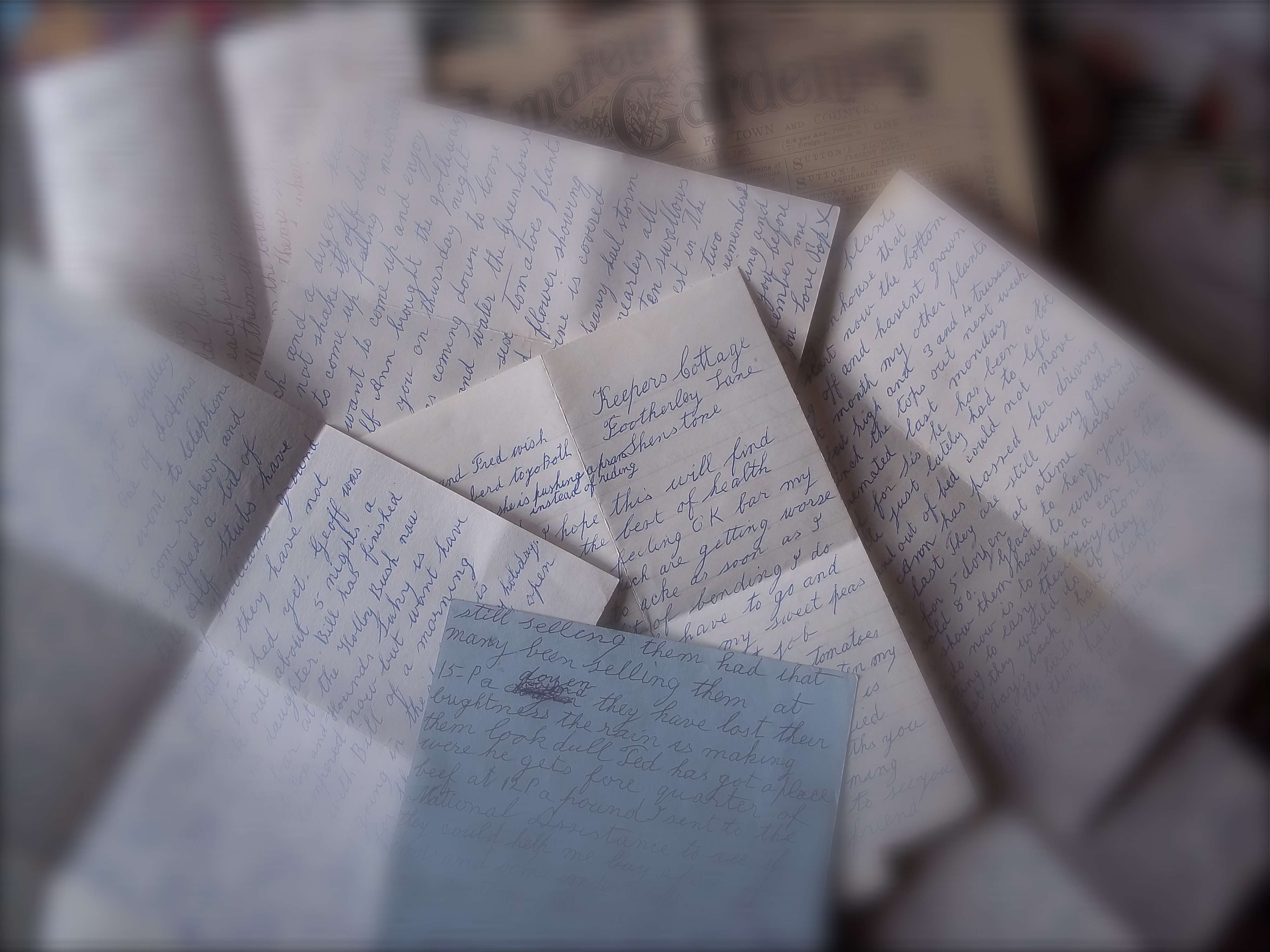
Later in the 1960s, after 30 industrious years of farming at Owletts, my aunt and uncle had been able to purchase an ancient stone farmhouse on a Welsh hillside. Uncle Alfred soon populated the sloping pastureland with the “Owletts Herd” of sturdy short-legged Welsh Black Cattle, and one Jersey cow for their domestic dairy needs. Diminutive Welsh Mountain sheep called from the top of the foel, whilst hens and Muscovy ducks also wandered around the little yard. Aunty Mary’s “retirement” was equally active. Extra accommodation afforded by a quaint tin-clad “chalet” and a large caravan was put to use in a thriving bed-and breakfast business, and meant that we, their fortunate relatives in the Midlands, had somewhere to stay on the beautiful Lleyn Peninsula. So although it must have been a loss to Pop when his eldest and, I think, favourite child moved away from Staffordshire, there remained the opportunity to visit her, and in between, keep up a busy flow of correspondence. Some of Pop’s letters to Mary have been passed on to me by my cousin Rosalind, and offer a valuable insight into his life at Keepers Cottage in the years approaching his death in 1975.

Grandad learned his rather beautiful copperplate handwriting at the school next to Stonnall Church, where he paid, he told us, a ha’penny a week to attend. Amongst the news of hatches, matches and despatches, and reports about success or otherwise on the “Pools”, both Suki and the glass eye feature in the letters:

“Suki nibbed two men last week” (whether that was a high or low weekly tally, I don’t know!)

“Suki is getting better tempered now but won’t have anything to do with Bill of a morning”

“….had pulled my glass eye out and put it in my handkerchief in my pocket…felt Suki pull my handkerchief out….my eye fell out, she grabed old [sic] of it and that is the last I’ve seen of it” (!)

But the dominant refrain is of horticultural chat and advice to his daughter, who, like almost the whole damned tribe of us, was an obsessively keen gardener:

“ ….had our first lettuce yesterday…tomatoes in flowers…the sparrows have eaten my first row of peas…”

“…..have got the largest part of the garden planted….lost all my sweet peas ….seed cost me 30 shillings…but got plenty of asters and the chrysanths are doing fine..”

Another year:

“I have had a good season with my chrysanths, ….been selling them at 15 pence a dozen…but now they have lost their brightness as the rain is making them look dull…..”

“the shoots are very tender….they will need some water….pinch the centers out when they are about six inches high”

I have been inspired to grow my Chrysanthemums in rows this year, and have enjoyed a really productive cutting patch since August. They are only spray varieties, of course, not the gorgeous single, incurved blooms which my grandad produced, and which are reminiscent of Dahlias, that other stalwart of the working man’s garden. My husband’s childhood memories of life in a Yorkshire mining village in the 40’s and 50’s are also coloured with rows of gaudy blooms in his own father’s garden, and those of many neighbours. It is interesting to note that the “masculine” flowers: chrysanths, dahlias, auriculas, and sweet peas, are those that lend themselves to selective breeding, to the creation of novel or exaggerated colours or forms. In that element of challenge, and, perhaps, competition, lies the “gendered” behaviour. Dr Lisa Taylor’s book, “A Taste For Gardening: Classed and Gendered Practices” speaks of this kind of of floristry as

“a form of masculine cultural capital which could be traded for economic capital at the local level”

She certainly seems to be describing the valuable contributions made to the household budget by the sales of garden produce over the wall in Footherly.

More than the generous proportions of a Yorkshire miner’s garden, my Grandad had whole acres which he and Uncle Bill could cultivate until their health began to fail. He was rich! He lived in a picturesque, rural environment of fields woods and streams, abundant with wildlife, which was more charming than the rapidly urbanising village of Aldridge, I thought. The Tilly lamps at night and the big iron pump in the kitchen made my grandad’s house special and superior to ours. The earth closet I avoided. I appreciated the 20th century plumbing at 155, Bosty Lane. (Although I was yet to acknowledge the luxury of my mother’s spotless housekeeping!)

And then this awful aside in a letter to Mary: “I sent to the National Assistance to see if they could help me buy a pair of boots and some underclothing they have sent me 10 pounds the man who called said I should have been having som [sic] every year….if you don’t ask, you don’t get.”

I gaze back at the textural interest of the frayed pullover in one of the photographs of Grandad: And a very painful memory rises up from somewhere: My 13 year old self volunteering to darn his pullover for him as a bit of a novelty for me, and taking away the pullover and being distracted from that repair by a million more interesting pastimes. And my grandad asking could he please have his pullover back, whether I had mended it or not?

Posted in Uncategorized | 8 Comments

And did those feet…

A pair of Women’s Land Army shoes at the Staffordshire County Museum at Shugborough. Stafford has a long history of shoemaking, and the “Lotus Shoes” collection is a great resource at the museum.

They don’t seem to have had a lot of wear, these sturdy but rather smart Women’s Land Army shoes, which are on display in the Staffordshire County Museum at Shugborough Hall. Peering into the glass case, Mother remarked that her pair, of similar vintage, didn’t see much service either. She wore her Land Army gumboots or hobnail boots for field work, and during leisure hours, that practical tan leather footwear was far “too clumpy” to be worn with her cotton print dress, or tweed skirt and jumper. That left only the odd parade on which they might see the light of day. I didn’t quite agree, as I looked down at my own flat brown lace ups – a version of which I always seem to have had in my wardrobe – and I regretted that Mom had saved none of her Land Army uniform, with the single exception of her badge.

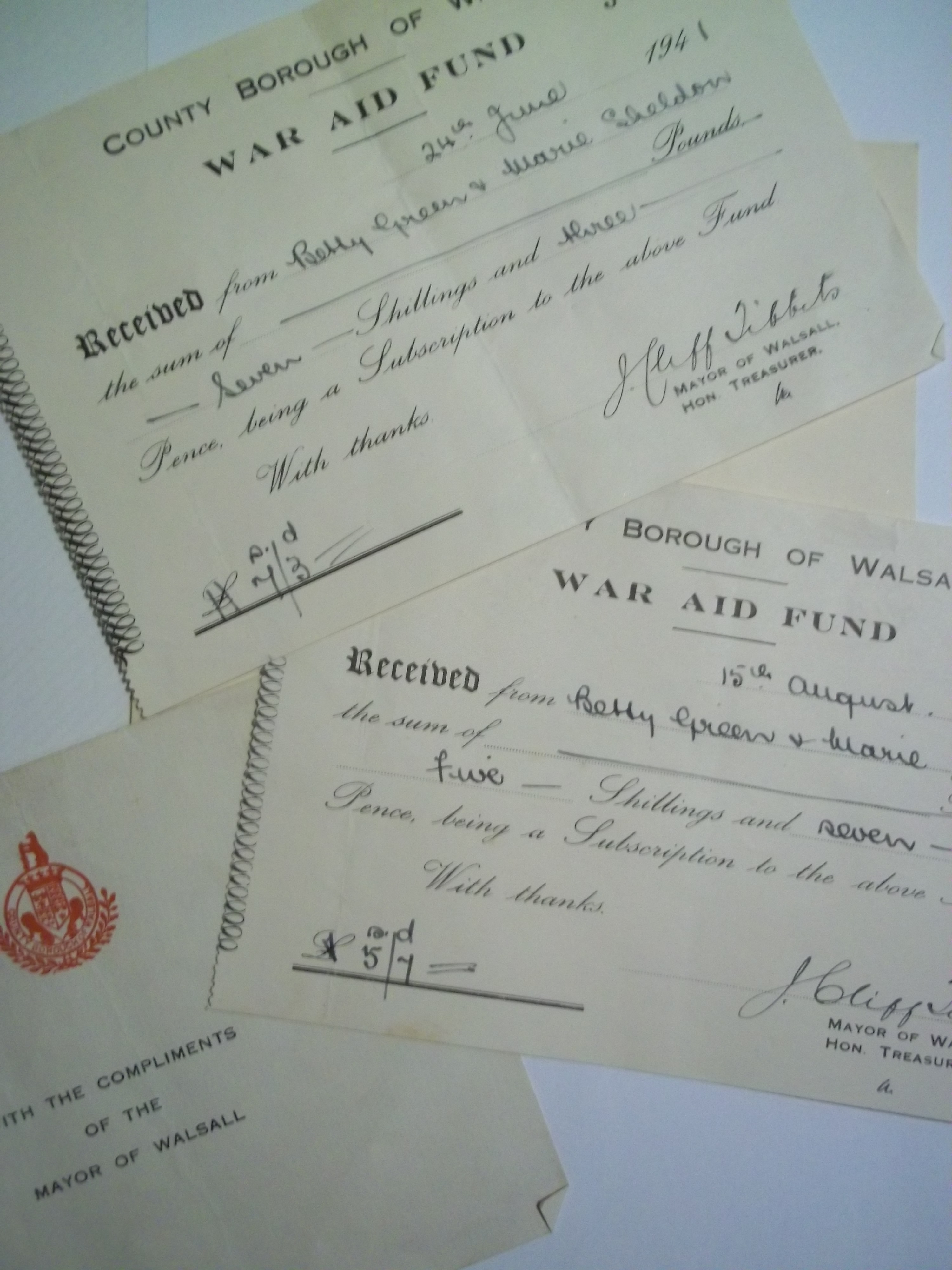
Mother and her best friend Betty Green took an early interest in the war effort. These receipts from the Mayor’s office in Walsall are for sums they raised together for the fighting fund and date to before her 12th birthday!

Receipts for fundraising for the Borough of Walsall War Aid Fund, 1941

The war was over when Marie (pronounced “Marry”) and Betty became old enough to enlist in the WLA, but their efforts were urgently required in an agricultural industry still woefully short of male labour. The organisation remained in existance until 1950, by which time over 100,000 women had served. Most, like Marie and Betty, were volunteers.

Following a brief interview at the recruiting station in Wolverhampton they were issued with a rail warrant. Shortly after, they were installed in the relatively newly erected small complex of temporary huts off Lynn Lane in Shenstone. This Land Army Hostel was to be Mother’s home from home for the next 13 months.

Here is Mom talking about joining up and arriving in Shenstone:

Joining the Land Army

….And describing her bed and uniform:

Beds and uniforms….

My mother, (far right) and her best friend Betty Green, (far left), lean out of the window of the Land Army Hostel in Lynn Lane, Shenstone – 1948

Whether Mom and Betty had been motivated by a burning sense of patriotism or a thirst for adventure coupled with sneaking admiration for the WLA uniform, the first few days were a trial for their soft young hands. Here she is telling me about her blisters:

The first, hard, days…

The hands toughened up, and the winter of ’47-’48 wasn’t as harsh as the legendary one which preceded it, but it was still hard labour to pick frozen sprouts from frozen stalks and to lift and chop icy root vegetables with a vicious hooked blade. Mom says that the sharp stink from piles of steaming pigmuck on the frozen fields was not an altogether unpleasant smell, and certainly one that sharpened the appetite.

Appreciation for the sterling efforts of the girls wasn’t unknown among the farmers they assisted. Here, Mom remembers how Colonel Swinfen Broun, in the last months of his long and interesting life, invited them into the kitchen at Swinfen Hall for their tea break. Here Mom is describing how he made an impromptu song request: (With apologies for my flippant remark!)

The girls have a tea break at Swinfen Hall

Accommodation in the hostel might have been Spartan, but standards did not inevitably slip. On the piano in the corner of the common room, “Big Iris”, (as opposed to her colleague “Little Iris”), played Chopin nocturnes “beautifully”. The Warden, Mrs. Brand was a sophisticated lady, popular with the girls she was responsible for, and continued to “dress” for her dinner, which she took secluded in her own little sitting room. Mom can remember her sweeping along in floor length gowns, which must have seemed like a relic from another time.

From Lincoln House in Shenstone, a contingent of Ukrainian Prisoners of War enlivened a dance organised for the girls in the local hall. News of this event was greeted with disdain by my future father, who had enjoyed the recent evening he had spent in the Boat Inn at Summerhill with Marie, after she (rather amazingly from my perspective) agreed to hop onto the back of his motorcycle when she was out for a walk with another Land Army girl. It was not much more than a mile round the lanes on the Ariel from Keepers Cottage to the Land Army Hostel. On foot, across the fields of Owlett Hall Farm, farmed by his sister and brother in law, it was only a 10-minute stroll.

Marie Sheldon and Ted Horton outside the Land Army Hostel, Lynn Lane, Shenstone. 1948.

Ted Horton found that he happened to be passing that way more and more frequently.

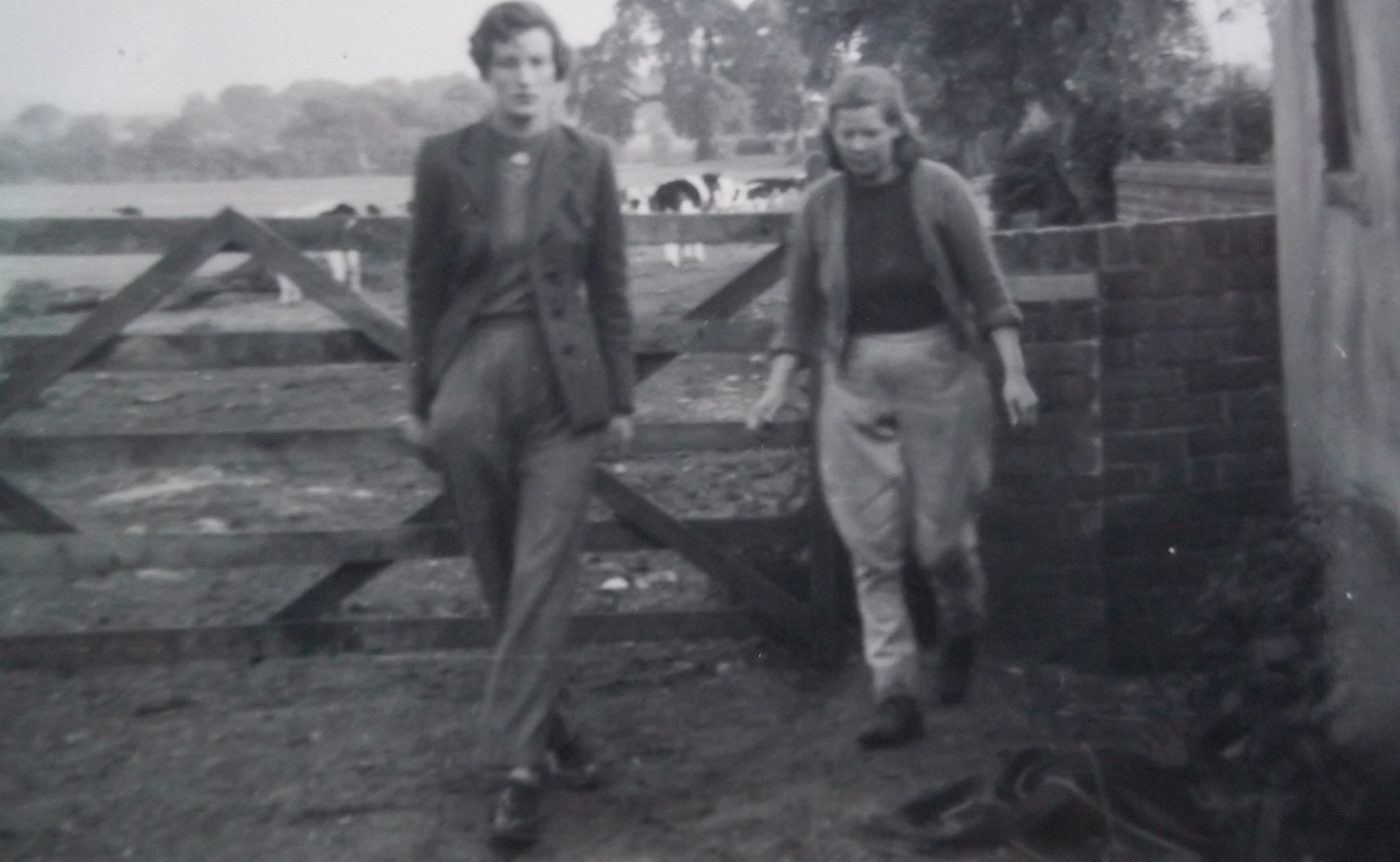
By November 1948, Marie and Ted were married, and mother’s Land Army britches were still doing the job they were issued for, clothing a hard working woman on a Staffordshire farm, Mom’s new sister in law, Mary Cooper

At Owlett Hall Farm, Lynn Lane, Shenstone. Mom, left, and Aunt Mary.

Mom says that she later got loads of wear out of her nice fawn Aertex shirts.
But whatever happened to that warm overcoat, and those lovely shoes?

Posted in Uncategorized | 11 Comments

A cast from the past

“Norton Pool, July 1957”. Alfred Noah Horton and Thomas George Horton have gone fishing, photographed by Edwin Noah Horton.

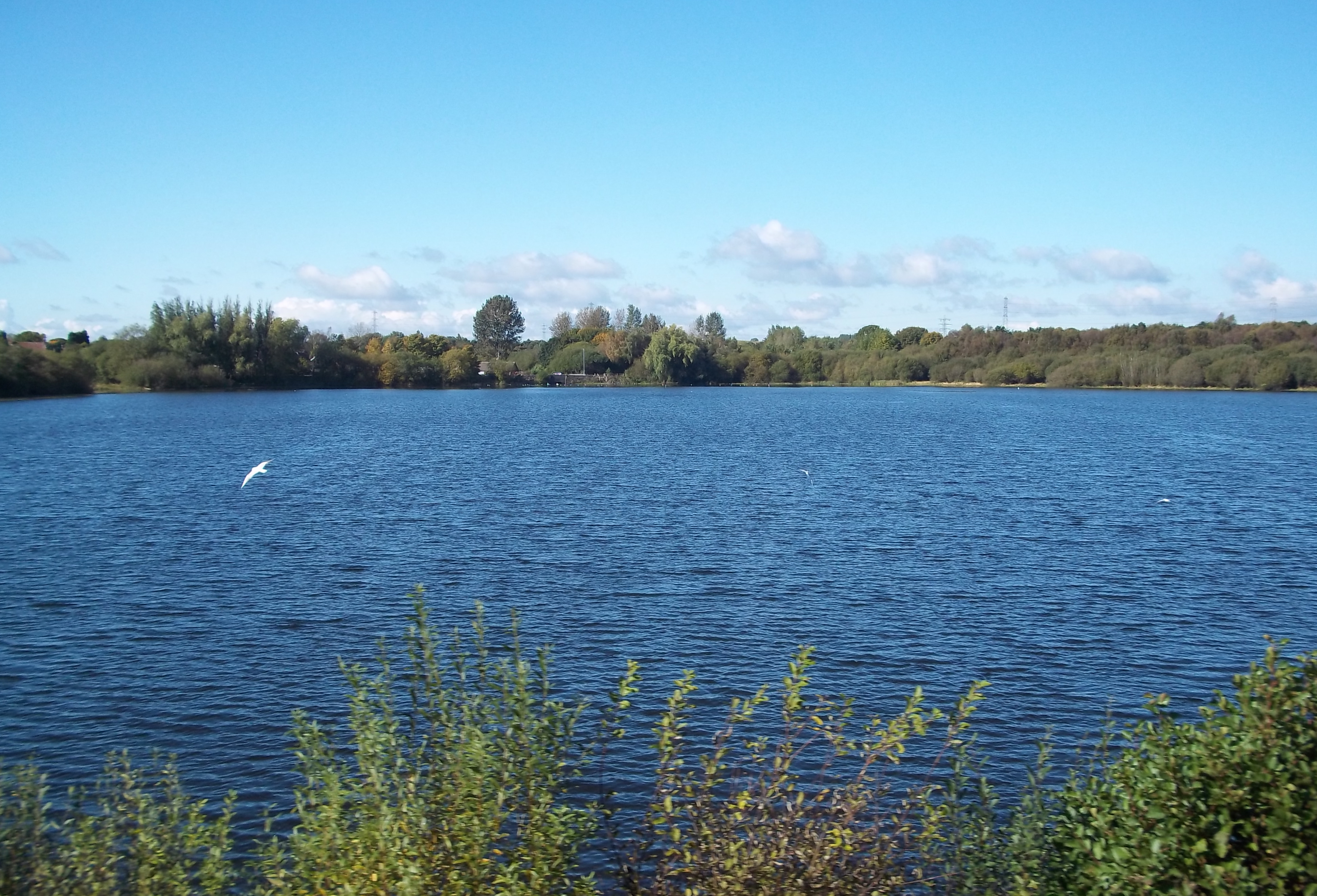
It was warm enough and shallow enough on Norton Pool, only recently rechristened “Chasewater” in July of 1957 for Grandad Horton and my Uncle George to wade out into its clear water barefoot, trousers rolled up, angling for carp or roach or pike. My mother’s careful note on the back of the photograph informs us of the month and year my father took it, and Graham Evans’ fascinating “History of Chasewater” which can be read in full at http://www.chasewater.org, confirms that 1957 was a “year of drought, with water levels the lowest since 1921.”

I wonder how long Grandad had been fishing in Norton Pool? For the whole of his childhood, it must have been the largest expanse of water he had ever seen. He would have had nothing to judge it against in order to condemn some of the unlovely byproducts of industry and coal extraction apparent on its shoreline. And weren’t those eyesores the result of the same activity which gave employment to his father, Thomas Horton, “Coal Miner, Hewer Below Ground”?

In 1901, it would have been less than a two mile walk to Norton Pool for 11 year old Alfred Noah Horton from the family’s current home in “Cherry Cottages”, High Street, Clayhanger. How long they lived there is uncertain, because by 1911, the Hortons were back where they came from in Stonnall, living amongst relatives at Fishponds Cottages, yet only a further mile away from Norton.

How much leasure time would he then have had, at 21, as a “Coal Miner, Banksman -Surface”? The household would have had a reassuringly decent income for my great grandmother Elizabeth to manage it with, as Alfred Noah’s brother John was employed loading coal below ground, and his father Thomas was still working – his specific occupation described as a “pikeman’ . (Having the task of dropping the coal from the roof at the coal face, with a long pike staff)

Grandad never mentioned his work at the pit to me. Unlike his short stint as an apprentice blacksmith, recalled with amusement, and which, for some reason, did not suit him. As far as I knew, like his three sons after him, he had always been in the building trade.

In 1912, Grandad was married, and a few years later, now with a family of five children, had moved to Keepers Cottage, where the Footherley Brook bound the long field of their smallholding, and the opportunity to fish was close at hand for my dad and his brothers.

“Chasewater”, October 2012

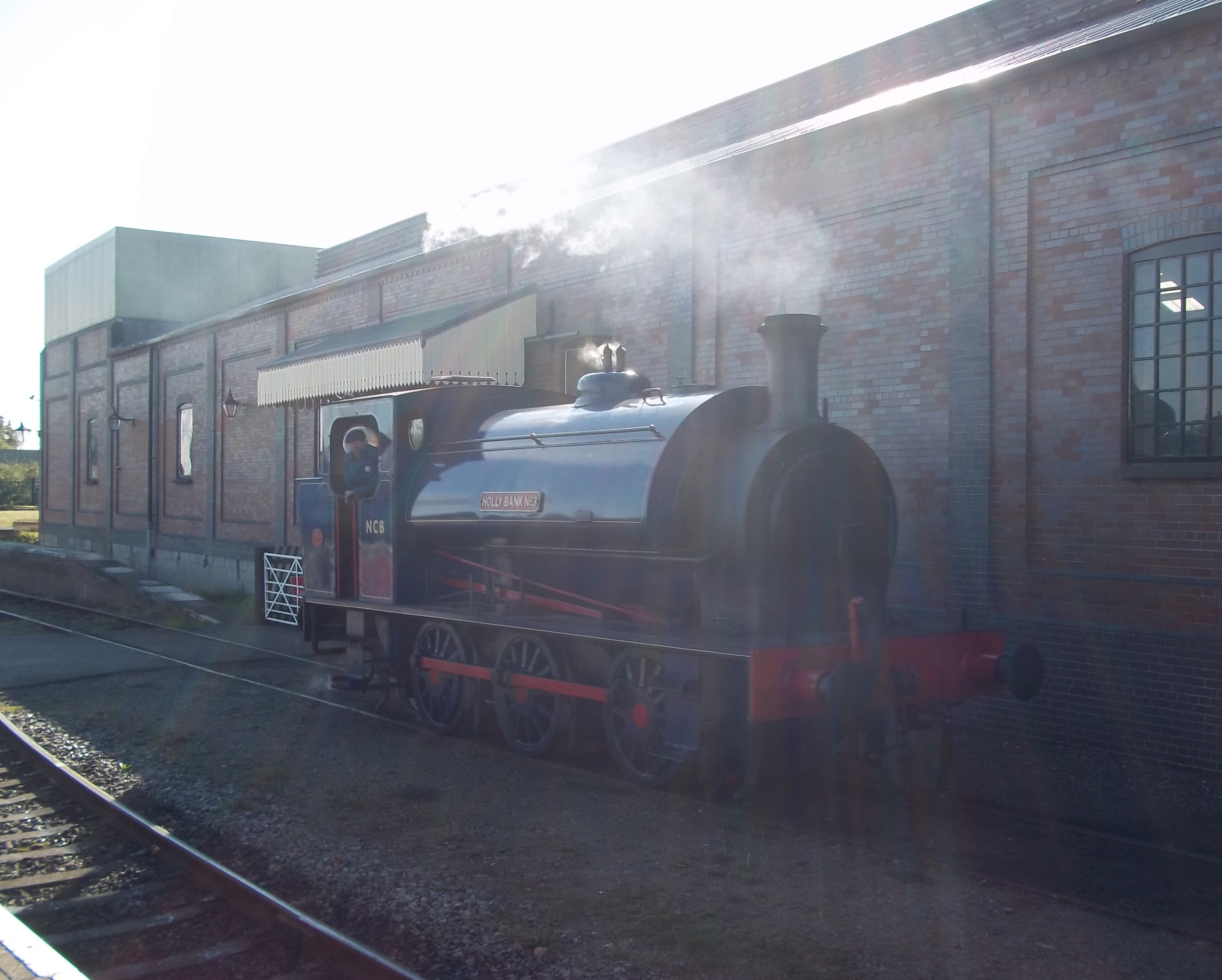
Nevertheless, the summer outing to fish at Norton Pool in the 50’s had not been an isolated event, my mother reminisced on Sunday as the little steam locomotive “Holly Bank No 3” of the Chasewater Railway pulled us around the sparkling blue pool, picturesque in the sunshine.

Now the area is a wildlife sanctuary and a beautiful, natural, area – it does not matter to all the special flora and fauna that call it home that the pool came into existence as a reservoir built to service the canal system in the late 18th century. We saw deer and waterfowl. The atmosphere of family fun in the carriage was infectious. The volunteer week-end railwaymen were immaculate in their crisp uniforms, with the exception of the girl driving the engine, resplendent in her boilersuit, her friendly, grinning countenance authentically smutted with coaldust.
The sound of that steam whistle is very evocative of train journeys past.

Mom leaned back on the authentic red plush seats, and remembered her daunting and exciting first ever railway journey as a girl, when their next-door neighbour in Bentley, Mr Walker,was a railwayman, and he had kindly included her in their familiy’s outing by concessionary ticket.

And in 1947, when her travel warrant arrived to authorise her journey to her Women’s Land Army posting in Shenstone – well, who knew how far away from home Lichfield was, as her friend’s mother waved them off from the platform at Walsall station?

Posted in Uncategorized | 3 Comments

The House That Ted Built.

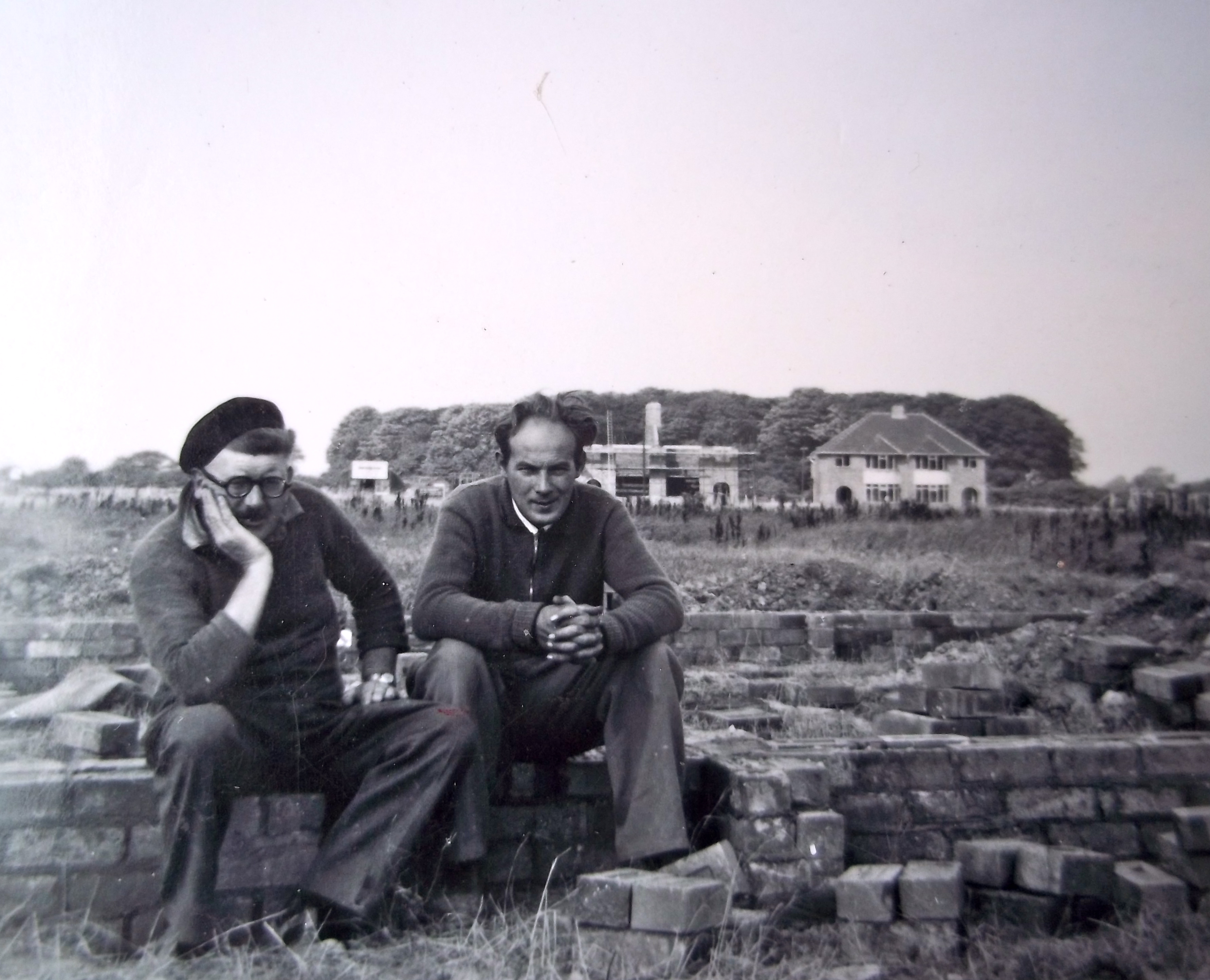
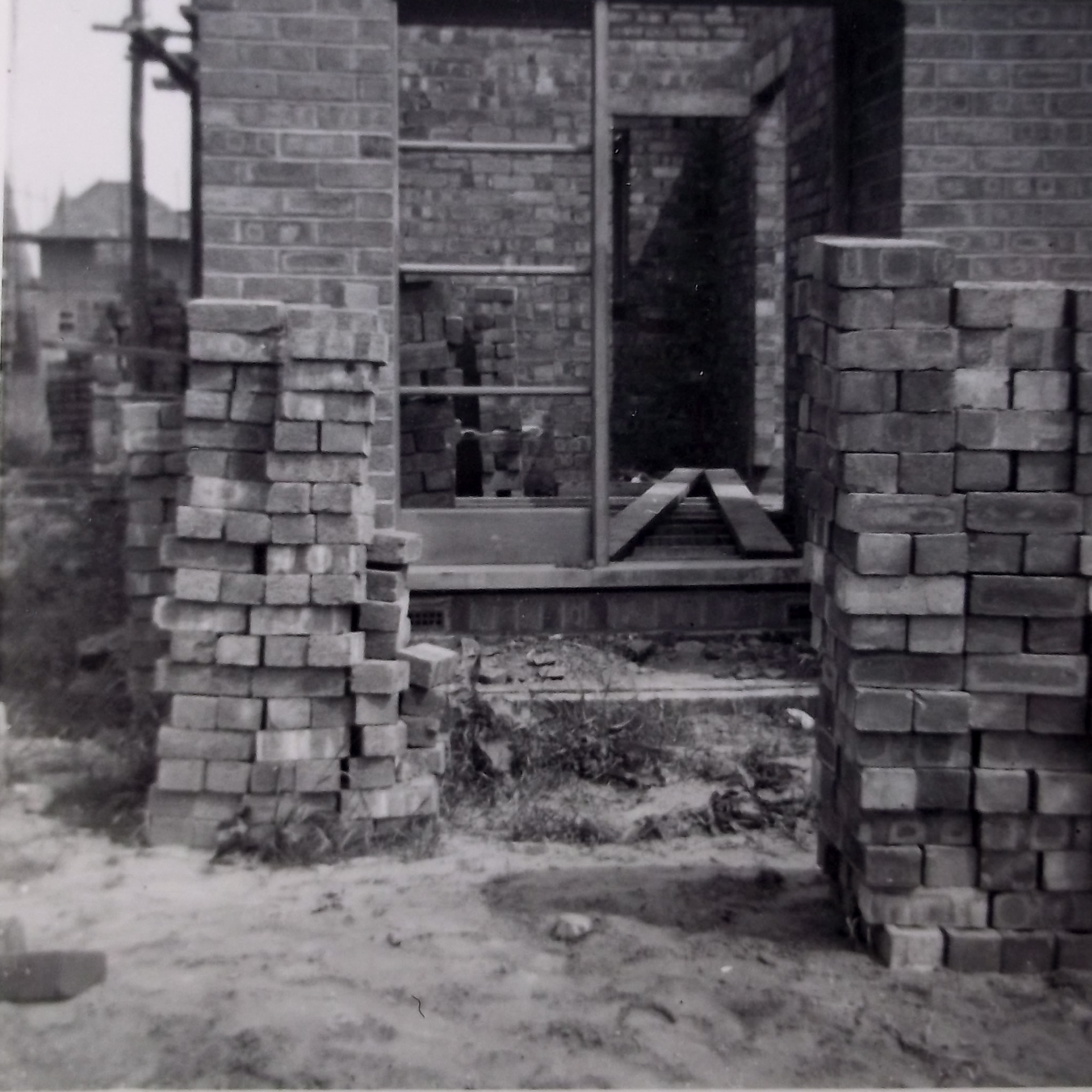
The foundations of number 155, Bosty Lane, at the very beginning of the development. My dad, Ted Horton, is on the right, with his prospective next door neighbour, Gordon Rodgers. In the background loom Linley Woods, with their ancient lime workings, and the partly constructed buildings which will be numbers 3,5,7 and 9 Linley Wood Road.
“What IS that activity you do when you perform a song?” my University tutor asked me, purposefully, some time in the early 80’s, as we strode in step up the challenging incline of Egham Hill from the railway station.  “Singing”, I enunciated, carefully. “Sin.  Ging.”

“Hmm,” said Dr Martyn Wakelin in a satisfied tone of voice.  “The persistent non-coalescence of the Ng!”  It’s a feature of my English dialect that I was and remain proud to possess.  It’s the enduring, tell tale, phoneme that continues to betray a socially aspiring West Midlander when all else he utters is as Received Pronunciation to the un-tutored ear.

Dr Wakelin had something else linguistic to say about what he had read in the student register concerning my origins.  “Your home address is BostyLane! Have you any idea, Susan, where that comes from?  I must confess that for once I’m stumped.  I have no idea whatsoever about the etymology of that word.”

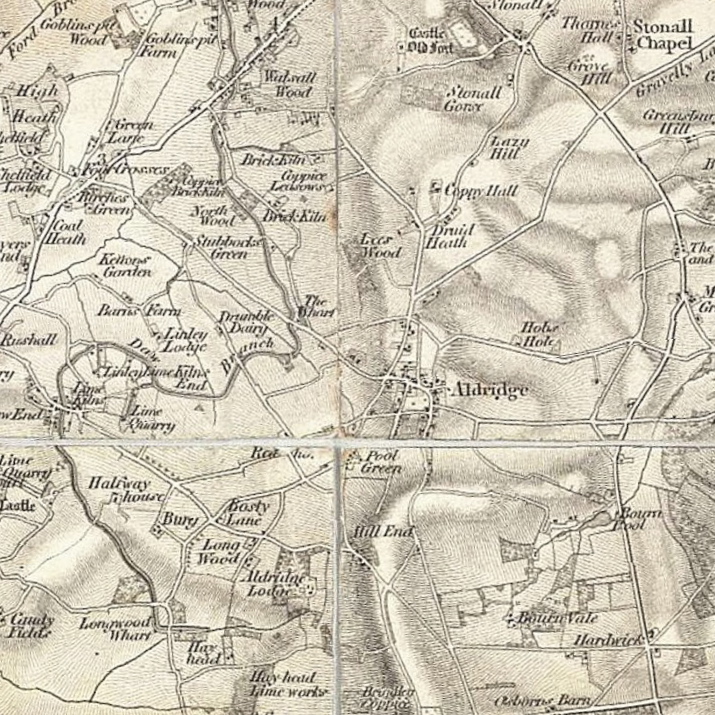
The 19th century first edition of the one-inch Ordnance Survey map of Lichfield and Birmingham shows Bosty Lane clearly marked. Marks where 155 and its neighbours now stand may denote a row of trees. Now as then, you can look from Bosty Lane over the land of Berryfields Farm – then marked “Bury”, and what is now called “College Farm”, intriguingly marked “Halfway House”. Halfway to what?

Me neither, Dr Wakelin. All I can tell you is that, in 1956, when my parents were choosing a building plot on which to site the first owner occupied home in either of  their  families’ histories, “Bosty Lane, Aldridge” seemed a fine enough address to write, indented, at the beginning of correspondence.

Mom tells me that they chose Aldridge as being equidistant from my father’s family home in Footherley Lane, Shenstone, and from her mom, dad, and youngest siblings in Bentley on the outskirts of Walsall.  The fact that it was a pleasant, semi rural environment and that the village centre was both picturesque and served by good butchers, bakers, fruiterers and grocers was also in its favour.  Although my father was vaguely aware that many of his forbears hadn’t moved very far around South Staffordshire, he did not know that during  the 18thcentury his Hathaway great great grandparents, and their parents, and there on back, were christened and wed in the quaint parish church of St Mary the Virgin, overlooking The Croft. Those Georgian Hathaways would have recognised much of Aldridge in the 1950’s, and very much less today.

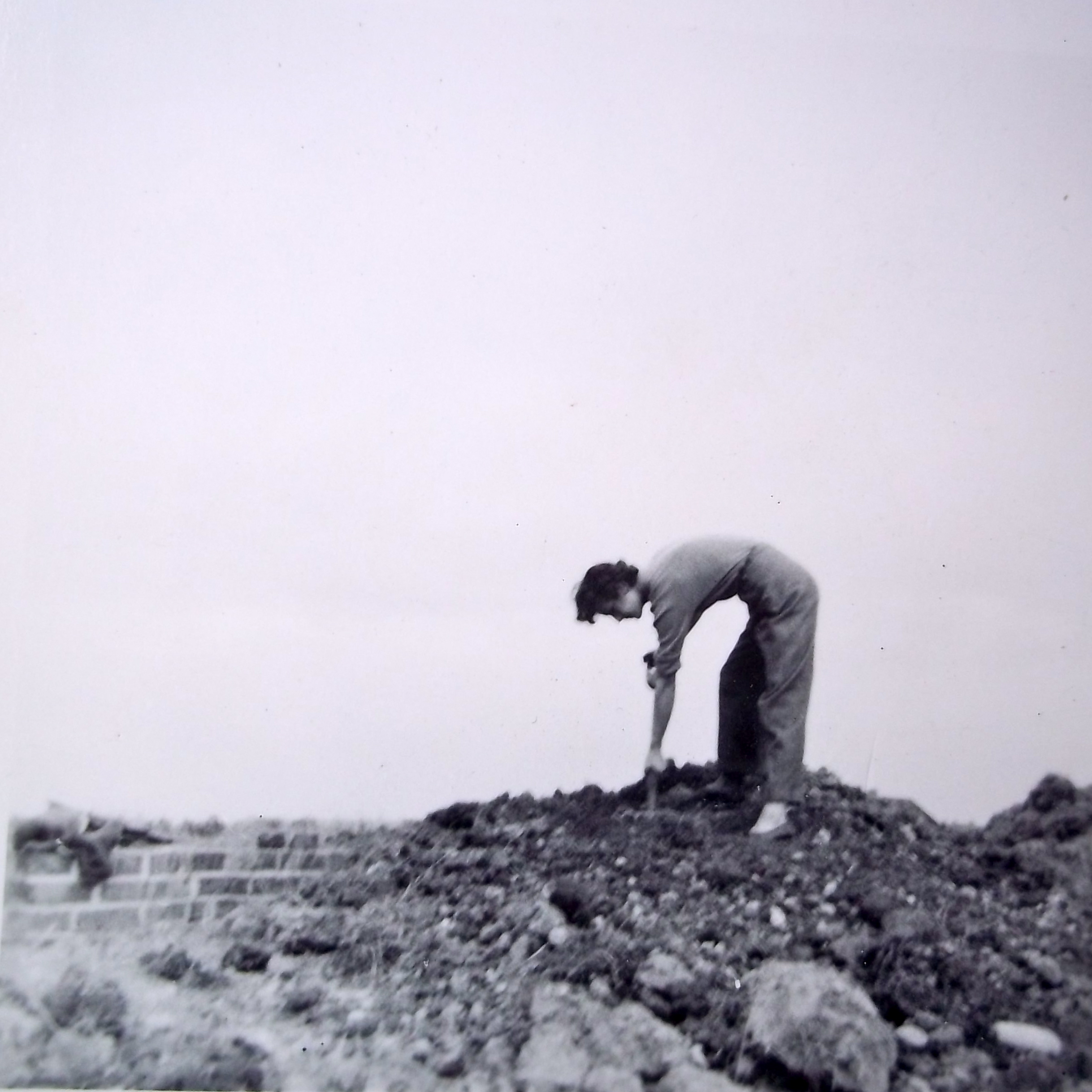
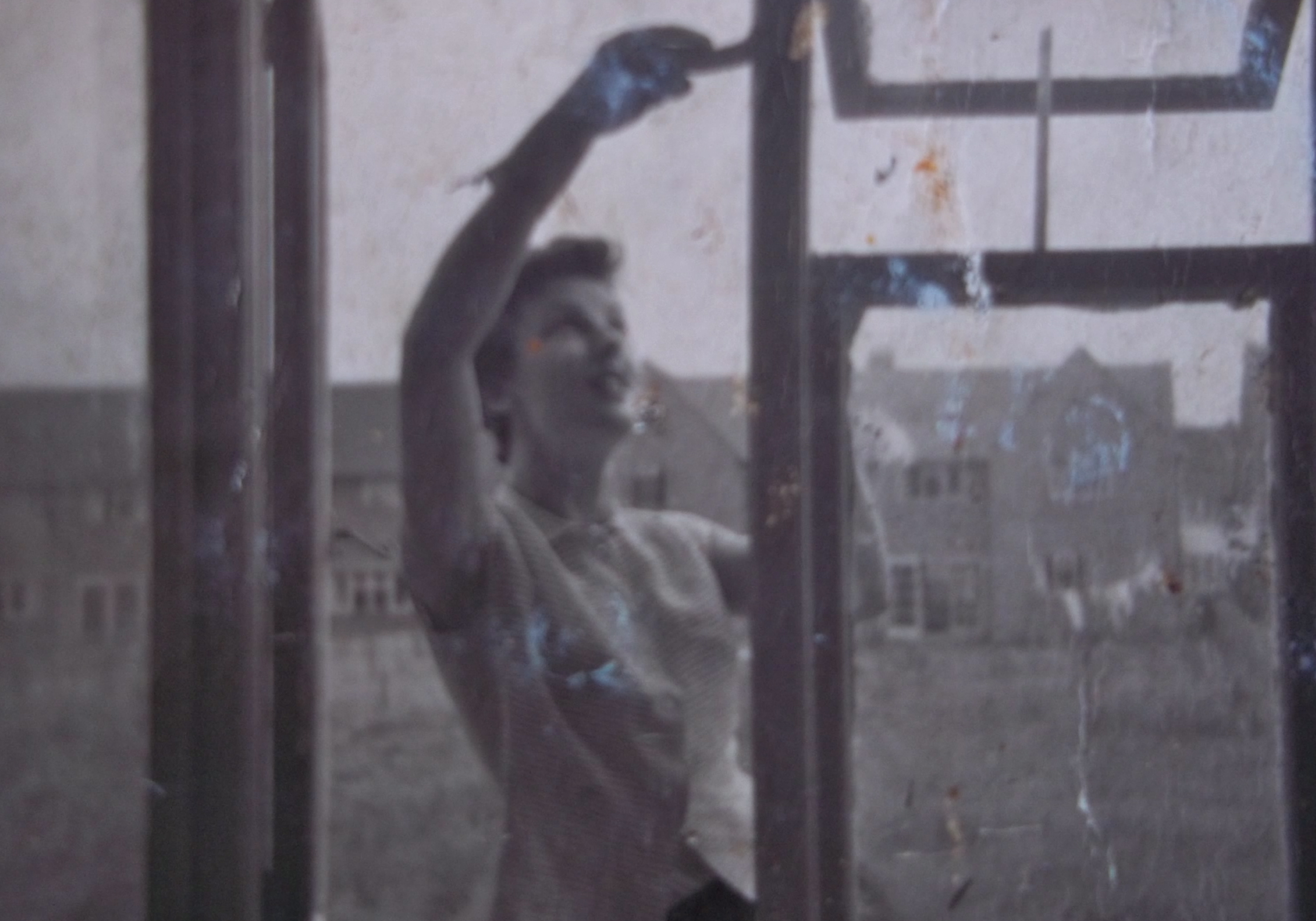
Mom (what a waist!!) gets stuck in. These are the few dozen square yards where, strange to think, she will live for the next 50 years.

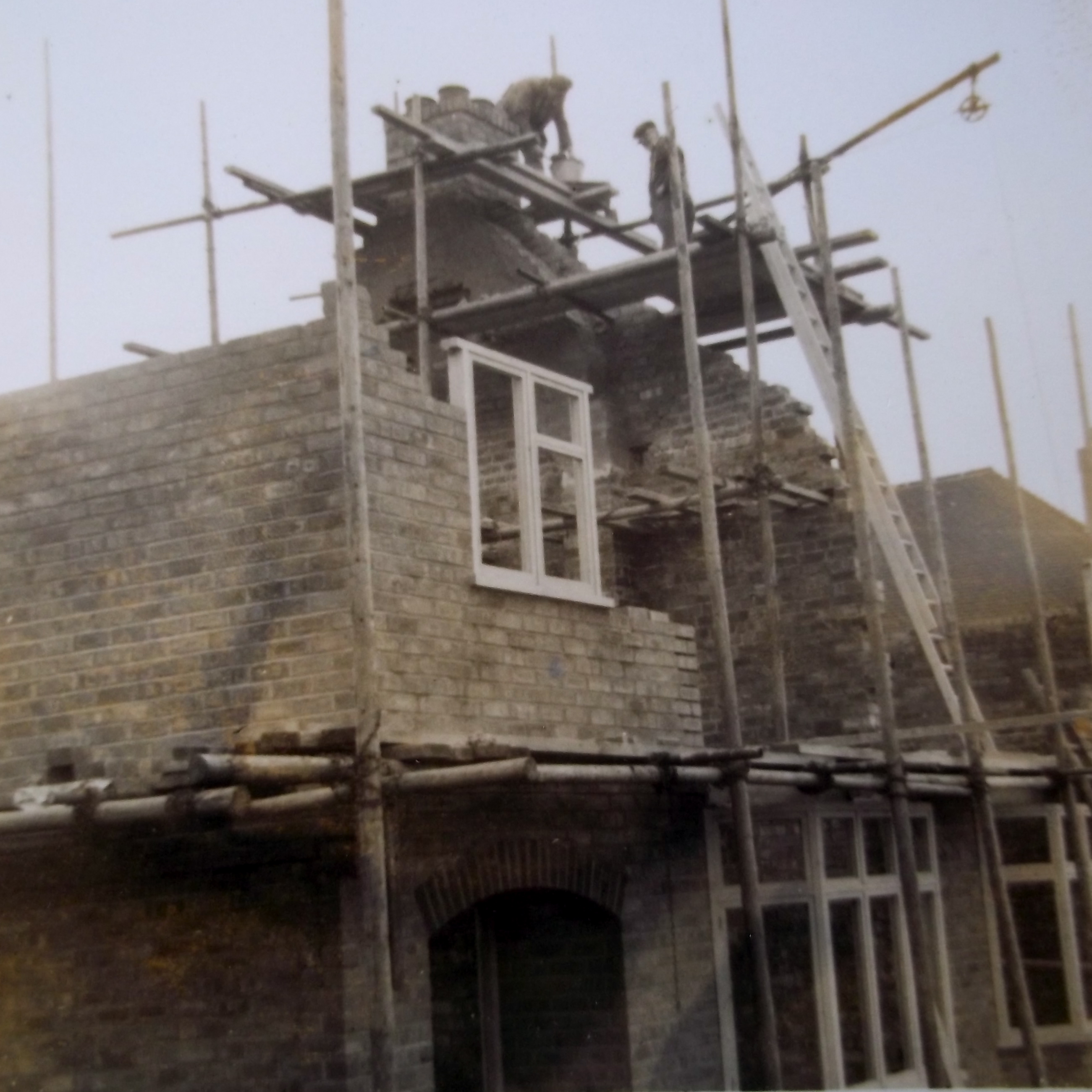
Building their house was not a daunting prospect as my dad had been in the building trade since being demobbed from the Welsh Guards in 1946. Not that either of them could afford to leave paid employment to construct their own property. By day, my dad was a foreman for J R Deacon, at that time constructing Brooklyn Farm Technical College at Great Barr. The building is now the James Watt Campus of Birmingham Metropolitan College. 155 Bosty Lane grew from the ground during evenings and weekends over the course of many months, aided by donations of labour from my dad’s colleagues.

The front door, through which I’ll pass tens of thousands of times.

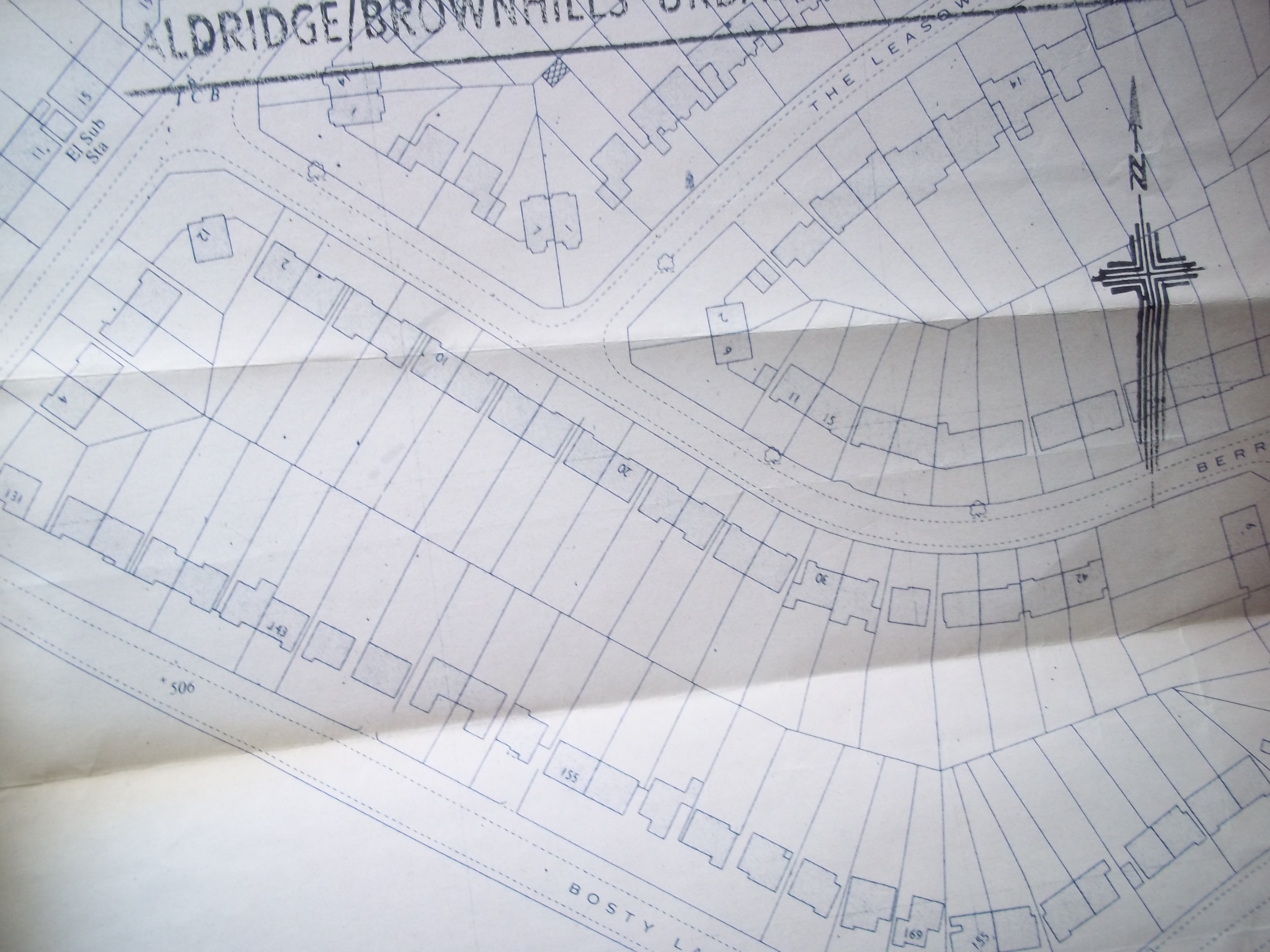
The future site of 131 to 169 Bosty Lane was a field of stubble, newly harvested of a wheat crop when my dad arrived to pace out the plots. He told me proudly, that he had measured the position of number 155 both from the southeast end on Red House Lane, and again from the north west on the corner of Linley Wood Road, so that any “allowance” the planners had made in their calculations was subsumed into our ever-so-slightly wider garden.

Coming on……

Between Red House Lane and the Aldridge to Walsall Road, 18 pairs of small semi detached houses had already been built some time between the wars. The 1950s development of that part of Bosty Lane in the shadow of Linley Woods was to be a mixed lot of semi-detached and detached houses, of varied and individual design. Why then, would a professional builder opt for one of a rather pedestrian and standard pair of semis for his own family home? Could the inherent economies of bricks, mortar and labour of the party wall be so persuasive to my parsimonious parent? Sadly, he did not have the resources to build both houses only to sell one on at a profit. The truth is this. My mother’s work colleague, Betty Rodgers, and her husband, were also keen to have their own home. Gordon Rodgers was, usefully, an electrician and would also act as labourer under my dad’s instruction if my parents would agree to “go in with them” on a pair of houses. It was not generally considered that my parents benefitted from this deal.

Finishing touches….


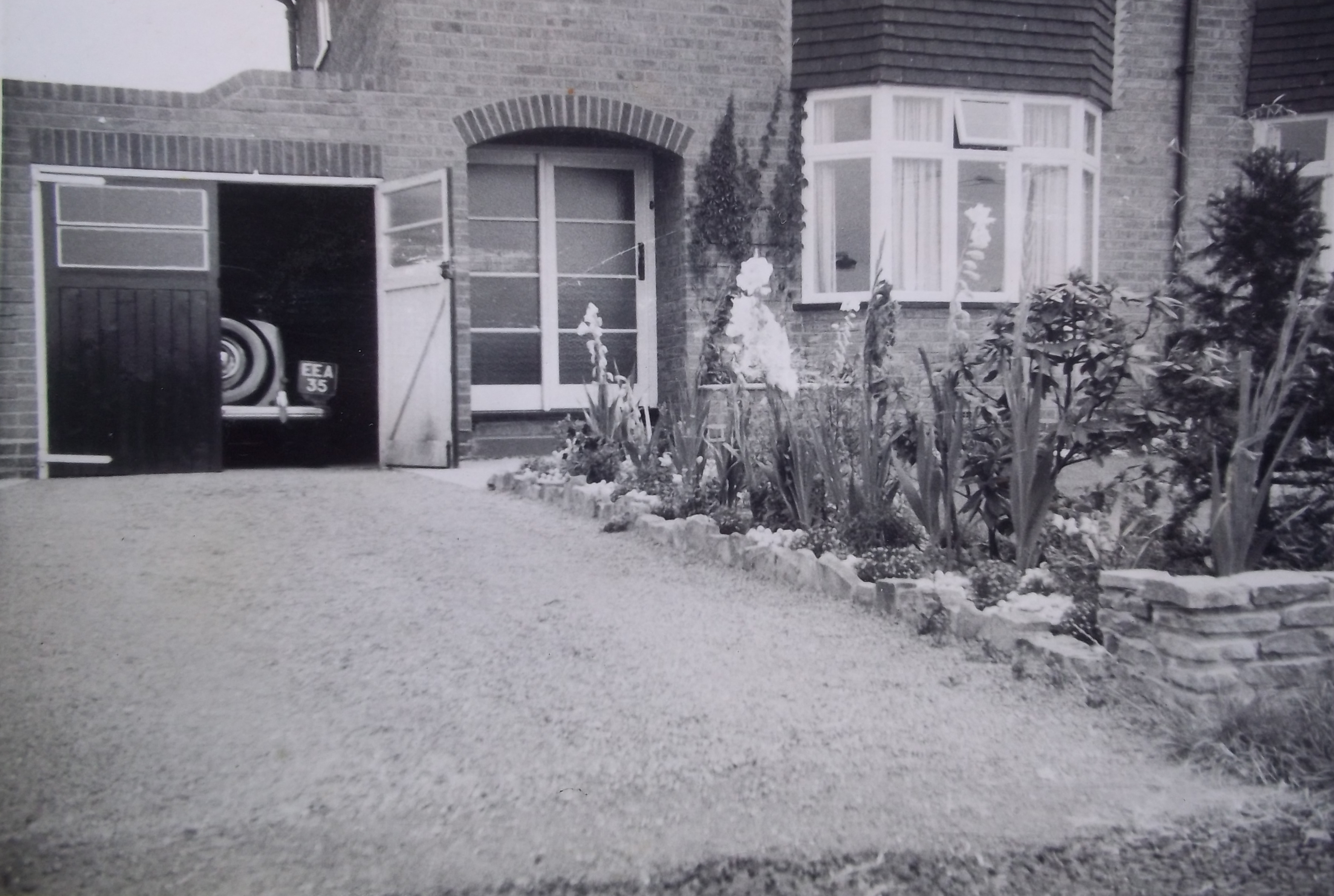
The perfect 50’s home and motor car.

Posted in Uncategorized | 9 Comments

A Shropshire Lad

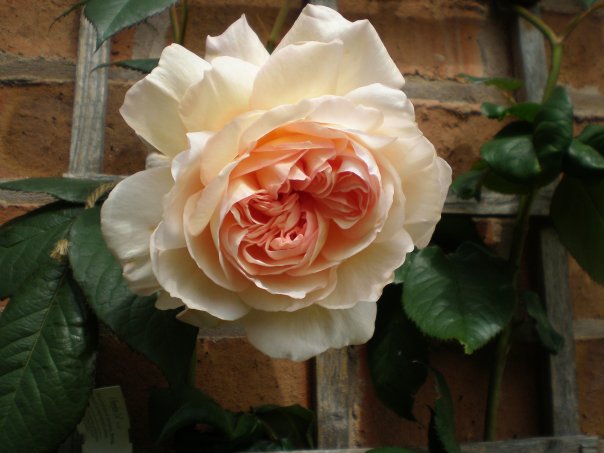
Rosa “A Shropshire Lad”, growing in my garden. This rose was bred by David Austin, a Shropshire lad himself, and introduced in 1996. It was named after the wistful late Victorian poetic work by A. E. Housman – not a Shropshire lad! It is said he had never visited the landscape he visited at the time he wrote about it. However, the mood of the poem is echoed perfectly by this beautiful, fragrant, peachy pink bloom.

A few weeks ago I headed west along the A5 in search of my Shropshire roots.  Ah, that A5.  Thomas Telford’s improvement of the “Watling Street’, closely following the Roman road from London to Holyhead has now been honoured with brown Tourist Board signs denoting “Historic Route”.

For many Midland families, joining the A5 and heading west has heralded the start of annual holidays in North Wales.  I still feel an echo of childish delight passing the landmarks: the black and white viaduct with Telford’s name on it, near the start of the journey; then “The noted Ham and Eggery” inscribed on the wall of the Bell Inn; and Atcham, now bypassed, where my mom would shout “Atcham!” when the village sign came into view, and my dad would unfailingly reply “Where they catch’em!”. And then the majestic Wrekin, precursor to the lofty peaks of Snowdonia, the awe inspiring climax of the journey.

These days, I also think about my great-grandfather, Enoch Blann who took the A5 in the opposite direction in the 1870s, from the rolling green hills, rich in mineral wealth, south west of Shrewsbury, to the vicinity of the newly opened colliery in Walsall Wood. He was not alone.  Incoming workers from the lead, copper and barytes mines of Shropshire founded several Walsall Wood dynasties.

By the time of his death in 1913, Enoch had established his own business in Walsall Wood High Street, and was listed in Kelly’s Directory as a shopkeeper. His wife Fanny completed the 1911 census form for the family, and described her husband’s occupation as “haulier”.  My impression is of a resourceful man who would exploit what opportunities he could to maximise his income.  My grandmother spoke of her father as “Nocky Blann, the coal haulier”, but also reminisced about their selling fish and chips through a window of their dwelling, and having an ice cream cart plying the streets of Walsall Wood in the summers before the First World War.

Fanny Blann, nee Shingler, Enoch’s wife, was a local girl who had been brought up in Cartersfield Lane, Stonnall.  When they married in 1890, she already had a three-year-old illegitimate son.  That Enoch took the lad on, and that David Shingler soon took his stepfather’s name to become known as David Shingler Blann, also speaks well of Enoch.

My grandmother remembered her father as a strict disciplinarian, a Methodist, who had served as a lay-preacher, as did his brother, Harry, in Russell. It was this thread of information I was following at the Shrewsbury archive, where I understood that some written records from the chapel at Snailbeach were held.  The books in question were largely illegible, having been badly water damaged, and I drew a blank there.  So the records of the 1841 to 1911 censuses, and records of births, marriages and deaths are, to date, my main sources of information on the Blann family.

I found that the Blanns in the 18th and early 19th centuries were a family of farmers, farm workers, and blacksmiths dwelling in the Welsh Marches and marrying Welsh girls.

Perkins Beach, where they settled, is in a picturesque valley behind the Stiperstones. In his detailed book about the mines of the area, Michael Shaw says that “activity is first recorded in the early 1840’s” in area where small, independent workings were relatively commonplace. In that case, Enoch’s parents, William and Elizabeth Blann could be seen as pioneers.  Aged 20, and with a 4 month old daughter, the 1841 census already describes the familiy living at Perkins Beach, and William as a lead miner.  There they remain, throughout the middle years of the 19th century, their family growing in number.  Who knows what toll on the health of my great-great grandfather William Blann was taken by his occupation?  Breathing healthier air in 1871, William and his family are living in the countryside in nearby Lower Vessons, where as a gamekeeper, William has tenure of “Wood House”.  Three of his sons still earn their living as lead miners, including 13-year-old Enoch, my great-grandfather.  But there were particular insecurities inherent in being employed by the big estate: In 1873, at the age of 59, William Blann died, and his family became homeless.  By the 1881 census, it was a William Griffiths who occupied what was by then renamed “Brook Cottage”, and enjoyed employment in William’s former position as gamekeeper.

Young Enoch, taking his widowed mother Elizabeth, and young unmarried sister Roseannah with him set off for Staffordshire, where coal mining was booming, in contrast to the decline of the mineral extracting operations in Shropshire. In 1881, according to the census, they are living in a house on Shire Oak Hill, and Enoch, proving himself a responsible man, is keeping the household by working at the coal pit.

They were not the very first Blanns to migrate to Walsall Wood from Shropshire.  Enoch’s eldest sister Margaret Blann, and her husband Samuel Pryce made the move some time between the birth of a son in Pontesbury in 1866, and that of a daughter whose birth was registered in Ogley Hay in 1869. Those were just two of their considerable brood of children.

Young Roseannah Blann married Frances Jewell only months after her arrival from Shropshire, left her brother’s household and began as serious a campaign of child rearing as her Aunt Margaret.  Margaret and Samuel Pryce named their second daughter “Roseannah”, too, and this Rosehannah Price (now Anglicised from the Welsh) made a  marriage to Job Painter and set about producing their many Painter children.  In 1901, she was near neighbour to her Uncle Enoch Blann in “Walsall Road, Shire Oak”.  By 1911, the Painter family, totalling 14 souls was living in crowded conditions on Salters Road in a dwelling of only 4 habitable rooms.  From these veritable litters, descendants of William Blann,  the lead miner, who returned to his rural roots as a gamekeeper for the final years of his life, would continue to populate the area for decades to come.

Enoch Blann died in 1913, aged only 56.  The previous year, my grandparents had got married.  Enoch’s daughter, my grandmother, Mary Elizabeth Blann, wed her cousin Afred Noah Horton, the son of her maternal aunt, Elizabeth. It must have been a well attended party, that.   Every few doors up and down Shire Oak Hill to Walsall Wood, Catshill, Lynn and Stonnall, I imagine the large clan of Hortons and Shinglers as well as William Blann’s decendents and their families the Prices, the Jewells, Painters, Coynes, and Raysons raising a glass to toast their relatives’ nuptials.

Posted in Uncategorized | 7 Comments

Sombre at the Sea-Side

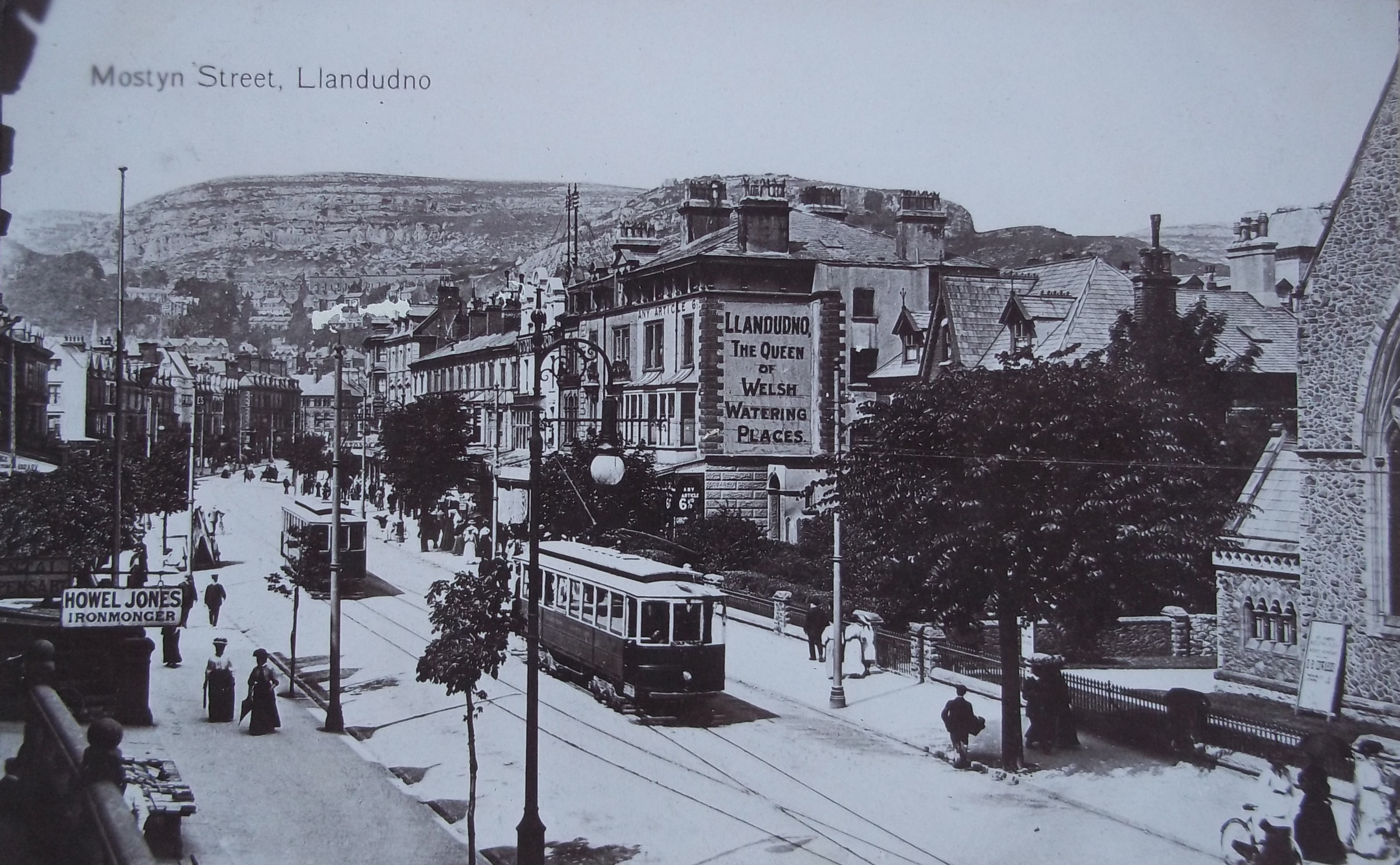
Mostyn Street Llandudno. This postcard was mailed in 1911, when my grandmother, Mary Elizabeth Blann was in service at number 46, the upper windows of which are visible on the extreme left centre of the picture. The Great Orme, where her ashes were scattered, is in the distance.

It is my grandparents’ 100th wedding anniversary.

My grandmother, Mary Elizabeth Blann was married from Walsall Wood in the cold, wet summer of 1912.  According to the census of the previous year, her family lived  a couple of doors from the “Travellers Rest” in Lichfield Road, and  her father, formerly a miner, ran a business as a trader of an eclectic range of commodities: she told us that not only was he a coal haulier, they also supplied fish and chips from a window of their very modest house, and employed a man to ply the streets with a cart of ice cream.

The day of the census does not find her at home in Staffordshire, however, but in “The Queen of Welsh Watering Places”, Llandudno. Not at leisure to enjoy its charms, but as the “servant” of John Williams and his sister Elizabeth, bakers and grocers at 46 Mostyn Street, one of the grandest thoroughfares in the resort.

“I was a cook in Llandudno,” she used to reminisce ruefully, as if wonderful things would have been possible had she not been enslaved into marriage and motherhood.  It seems unlikely that between April of 1911 and her engagement and wedding the following summer that she had been promoted to a position in service worth of being looked back on with wistful nostalgia.  We will probably never know.

“Lizzie” or “Ma” as she was known in my childhood, had known her husband for the whole of her life.  Their respective mothers, brought up in Cartersfield Lane, Stonnall, were sisters, making my grandparents first cousins.  I was vaguely aware of this, but despite the wealth of anecdotes which my father shared with me, the topic was never touched upon, and I have the impression that it was a source of embarrassment to him.  Of my father’s five siblings, only Margaret May died in infancy, and his eldest sister was robust and fit well into her 90’s, and so I am happy to discount having inherited any genetic deficiencies as a result of this liaison.

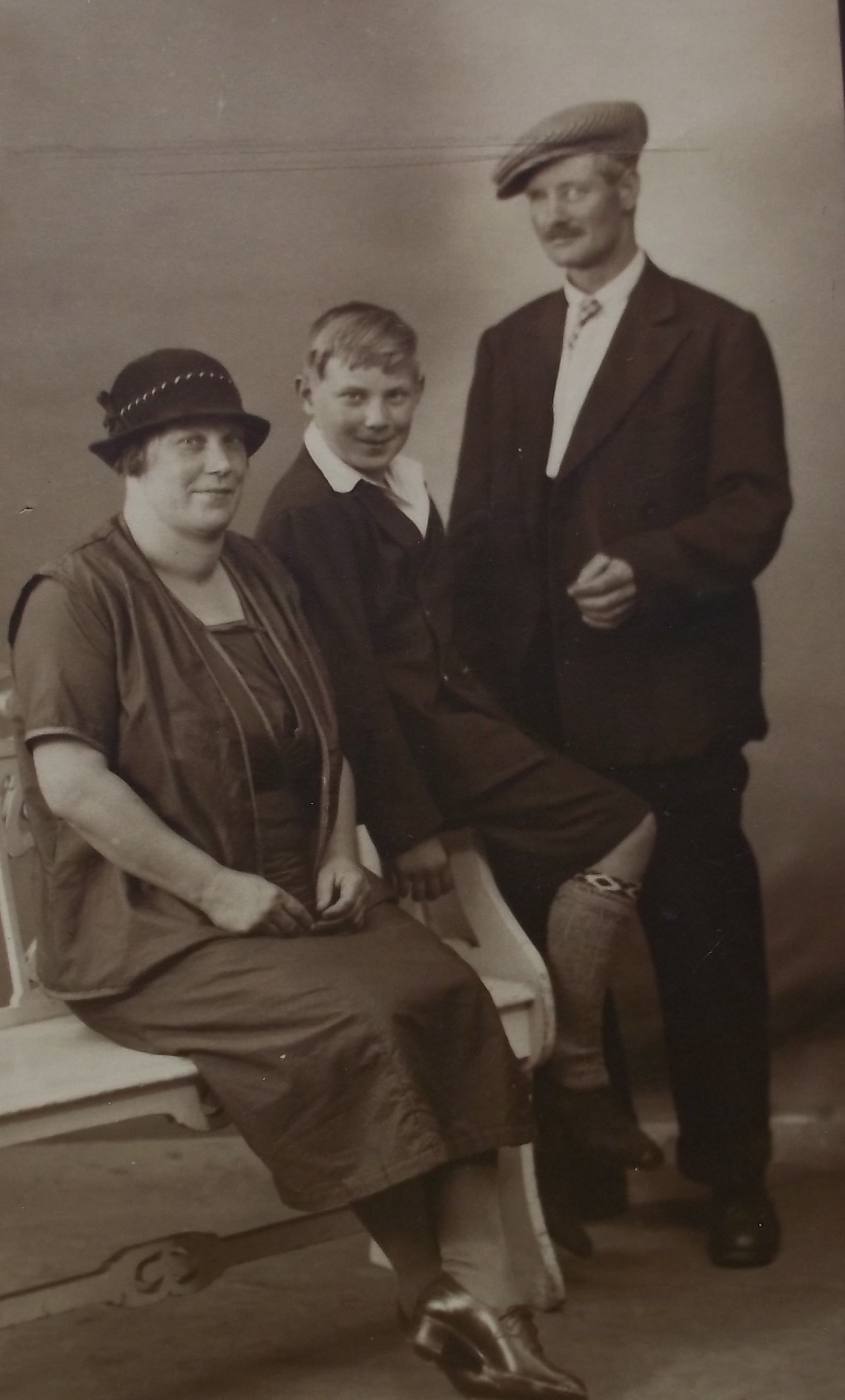
1930s. Mary Elizabeth Horton, nee Blann, Alfred Noah Horton, with their youngest child, Edwin Noah Horton, my father.  Lizzie suffered from a goitre.

Lizzie and her new husband Noah Horton began married life with his parents and brother in Fishponds Cottages, Stonnall, where their first child was born on June 1st 1913.  My aunt was evidently a honeymoon baby, who nevertheless spent her long life wondering whether her untimely arrival was the cause of her mother’s resentment about the life not lived in the shadow of The Great Orme. By the time of my father’s birth, the family were to be found in Walsall Wood.  Late in the 1920s, they returned to a picturesque but primitively rural cottage in Footherly, where, with a little land and a lot of ingenuity, they filled their family’s plates with home grown meat and vegetables.

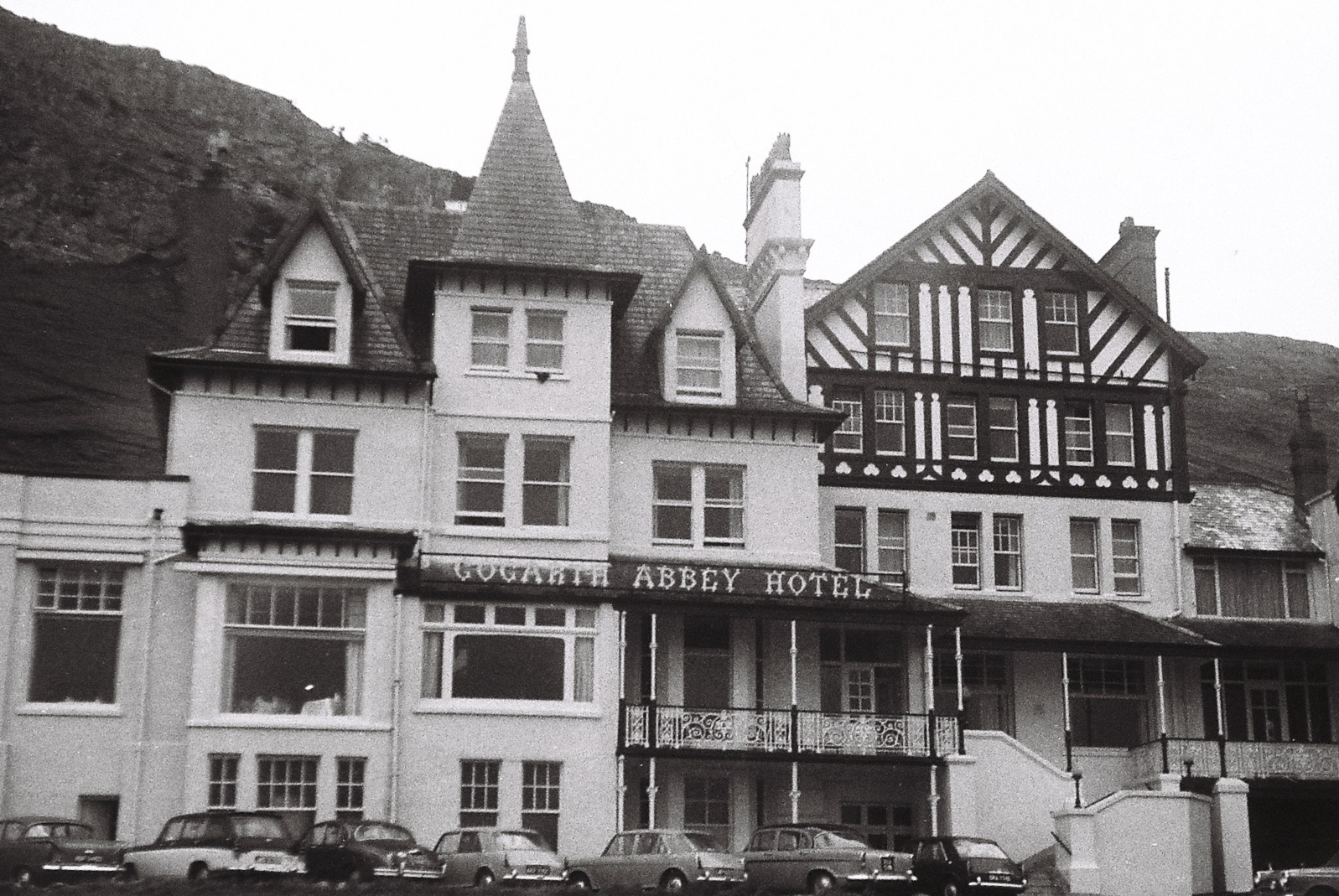
In the summer of 1966, following her death at Keepers Cottage, a solemn party composed of all the men of the family set off with Lizzie’s ashes to Llandudno.


There may be no one left to tell us why the place was of such significance to her for that  expedition to be undertaken.  Significant it undoubtedly was.
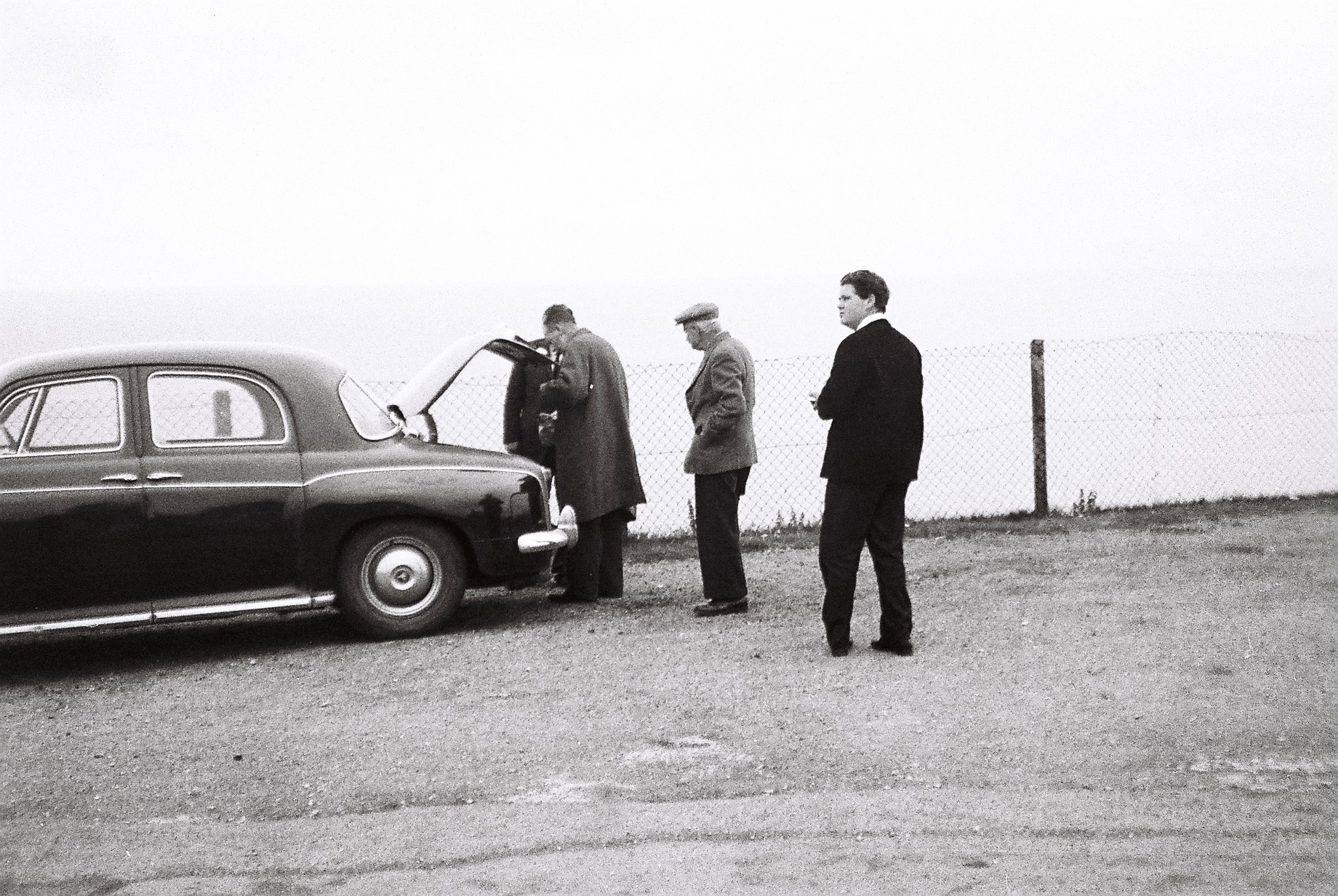
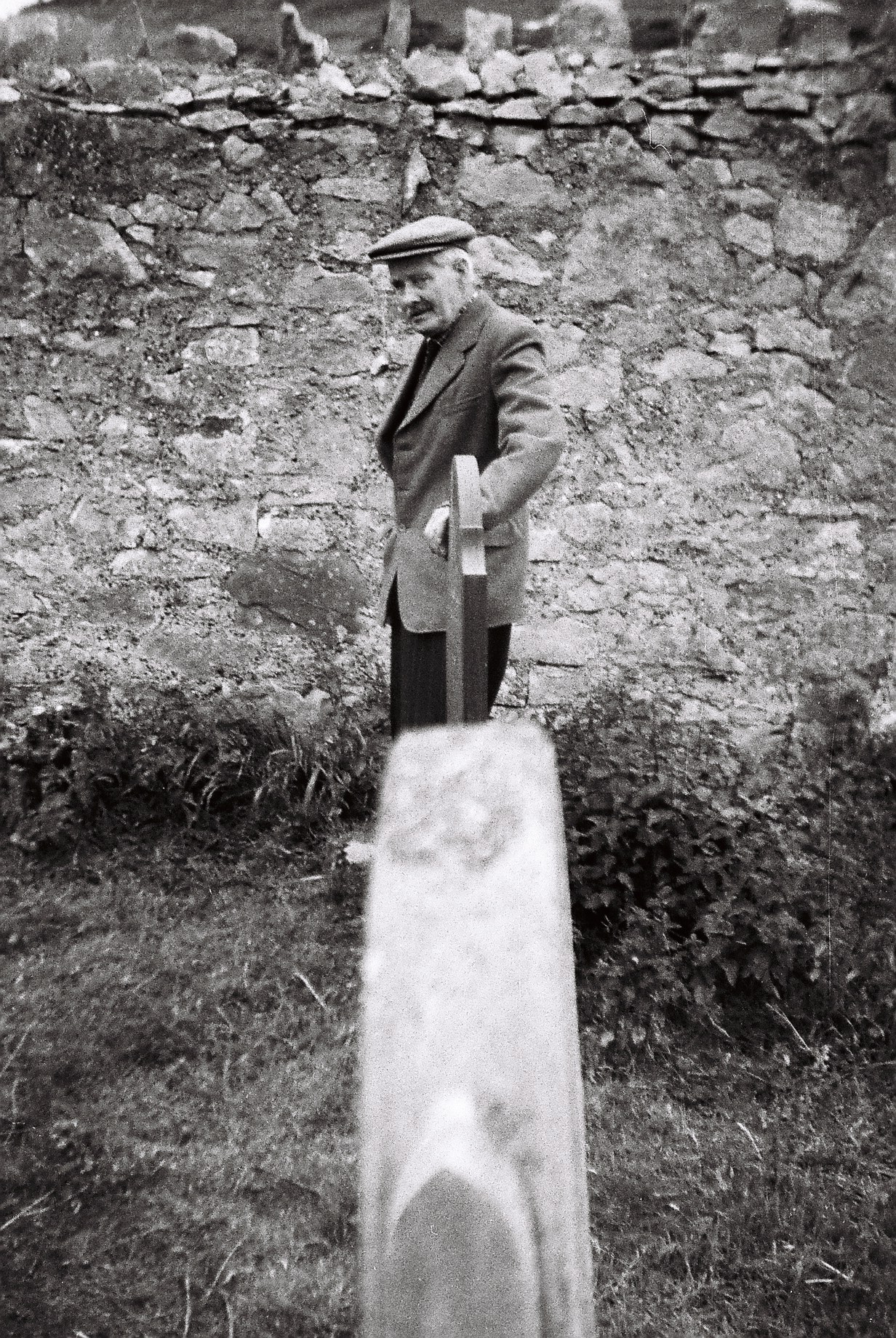
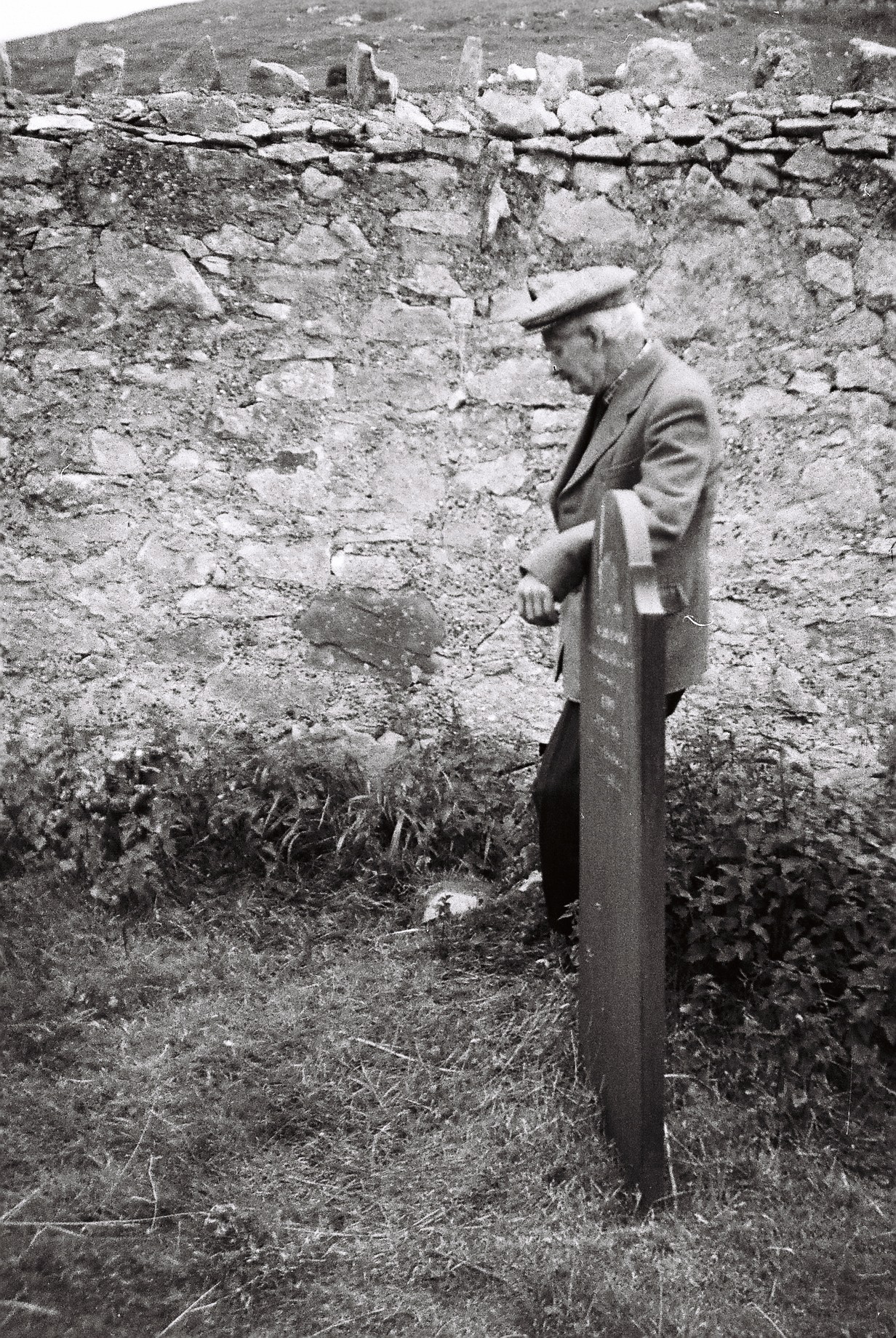
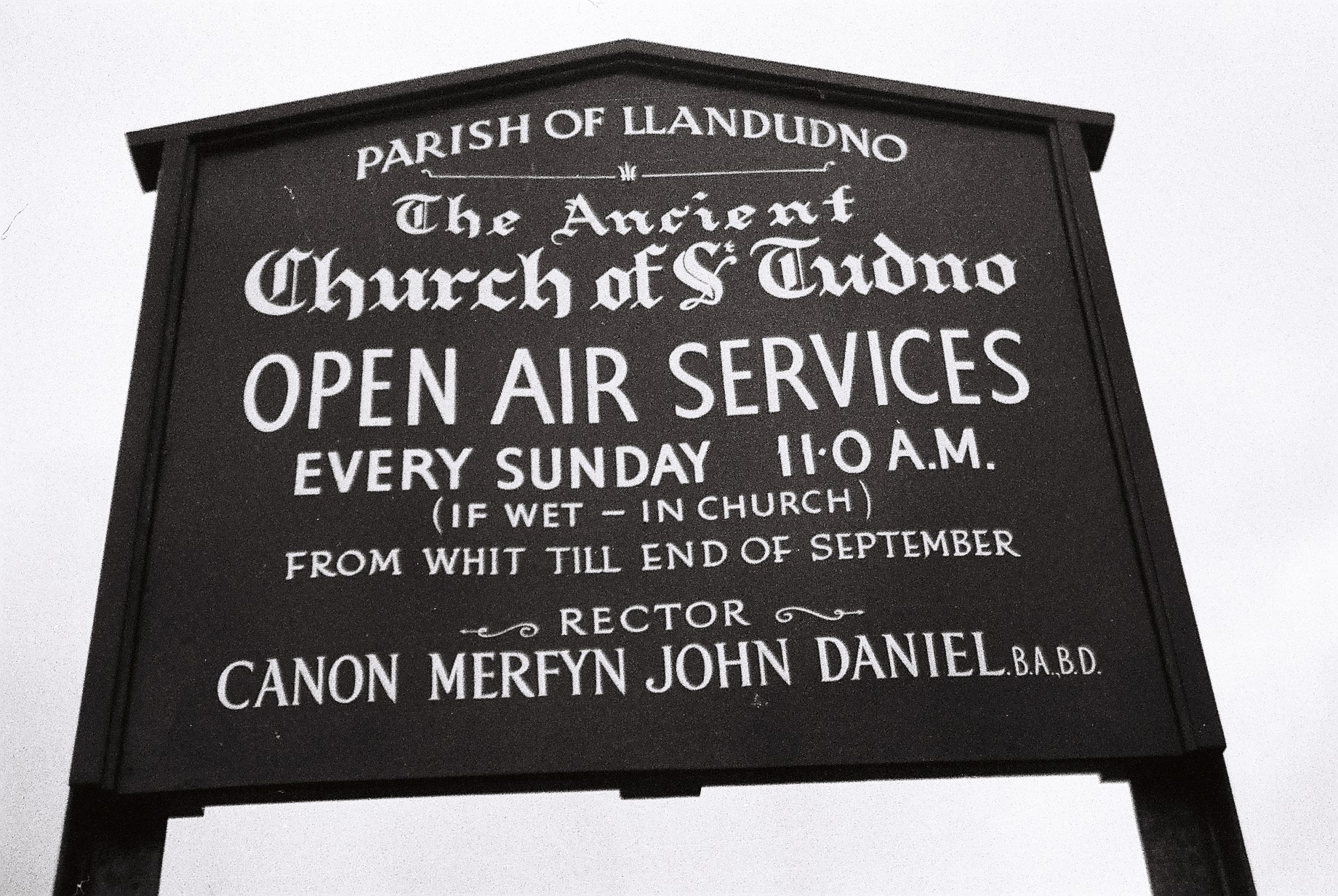
My father does not appear on the photographs he took to document the day, and record the exact place she was scattered in the churchyard of Saint Tudno with its dramatic seascape backdrop on The Orme.  The pictures were so provoking of emotion that they lay undeveloped on film which I have only processed since his death.

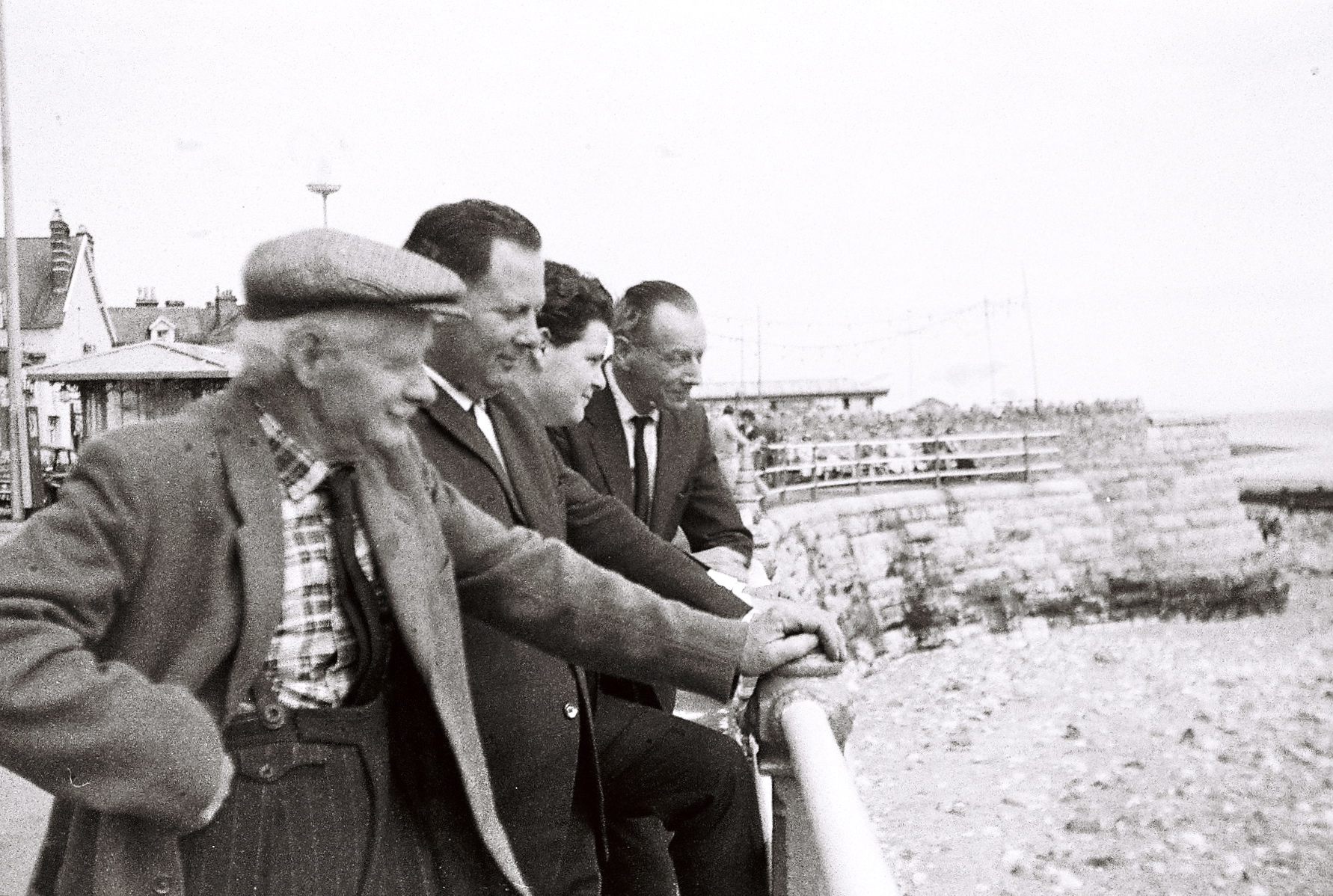
Llandudno 1966. Alfred Noah Horton, Thomas George Horton, David George Horton, Alfred William Horton. Photograph by Edwin Noah Horton.

Noah Horton contemplates the resting place of the ashes of his wife of 44 years

Posted in Uncategorized | 5 Comments